
 TrendPedia
 As I browse through social media, it seems like a regular occurrence to come across posts about giveaways, prize draws, or lottery victories. Messages that say things like “you’ve been selected,” “congratulations, you’re the winner,” or “claim your reward now” can be found in comments, direct messages, and even from profiles that seem verified.
By 2025, scams involving fake giveaways and lotteries have become some of the most common and successful types of online fraud. Every year, countless individuals fall victim to financial losses—not due to negligence, but because these schemes are intentionally crafted to seem thrilling, personal, and innocuous.
These types of frauds often start without any clear threats or noticeable warning signs, setting them apart from more conventional scams. They imitate the trends of influencers, promotional activities of brands, and authentic competitions. Deceptive rewards, ticking timers, and approachable wording are employed to reduce doubt and build emotional energy before individuals become aware of the situation.
The concept is straightforward: enthusiasm takes precedence over carefulness.
This piece explains the mechanics behind influencer giveaway and lottery scams, explores their effectiveness on social media, and highlights the warning signs that often go unnoticed until it is too late.
Let’s examine how these counterfeit awards are employed to sway trust—and how you can safeguard yourself from being the next victim.
What Are Giveaway & Lottery Scams?
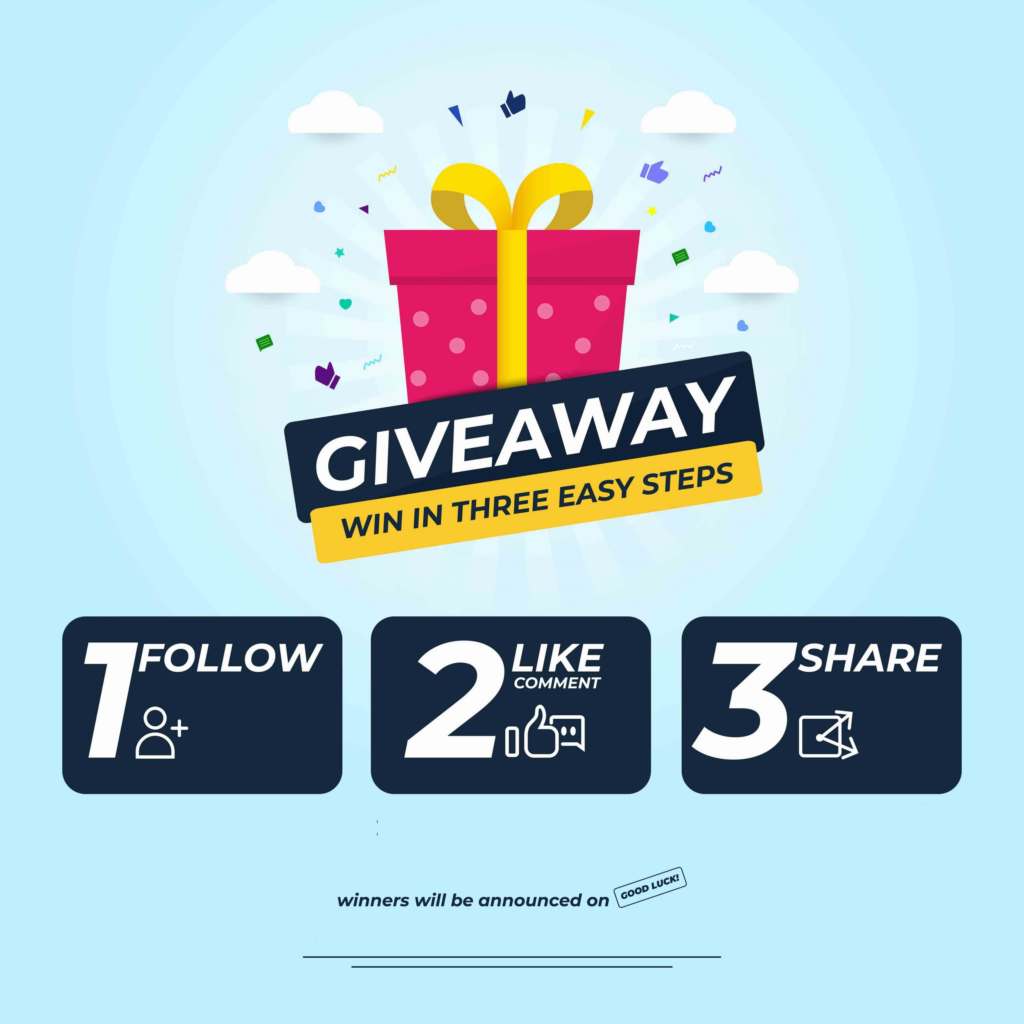
Scams involving giveaways and lotteries trick people into believing they have won a prize, been chosen for a drawing, or received a special gift, even though they never participated in a real contest. Those affected are informed they possess:
– Just won a giveaway!
– I’ve been chosen as a lottery winner!
– Got a prize, reward, or special gift
To “claim” the prize, they are then required to complete one or more seemingly minor steps. Typically, this involves covering a minor “processing” or “shipping” charge, disclosing personal information, or sharing sensitive data like OTPs or payment details.
This is the catch. After the information or payment is provided, the scammer disappears and stops all communication. The reward never shows up, the account vanishes, and the individual is left facing financial setbacks or compromised personal information.
The scheme succeeds because the ask seems fair and low-risk particularly following the emotional rush of “winning.” Once doubt creeps in, it is often too late to fix things.
Why Influencers Are Used in These Scams
Influencers are not selected as random. The reason behind their use is that they have already earned the goodwill of the people something that scammers could hardly achieve.
The influencers cause people to feel familiar through their frequent appearances. They are shown with their faces on the daily basis, the audience observes their activities and begins to believe that they are real, successful and experts. This will eventually make people less critical and more capable of listening.
This has a number of ways that scammers exploit. They create imitated influencer accounts, which are similar to authentic ones, steal the authenticated influencer accounts and insert scam links, or replicate photos and names and logos so that the accounts may appear credible. Others go to an extent of talking to followers to make the tainted real.
They play two large psychological gimmicks:
- Thought about approval: Individuals believe that the influencer checked the offer, although he or she may not have done that.
- Social proof pressure: Once they observe that other people like or comment on a post, it gives them the illusion of the social proof and creates the urgency.
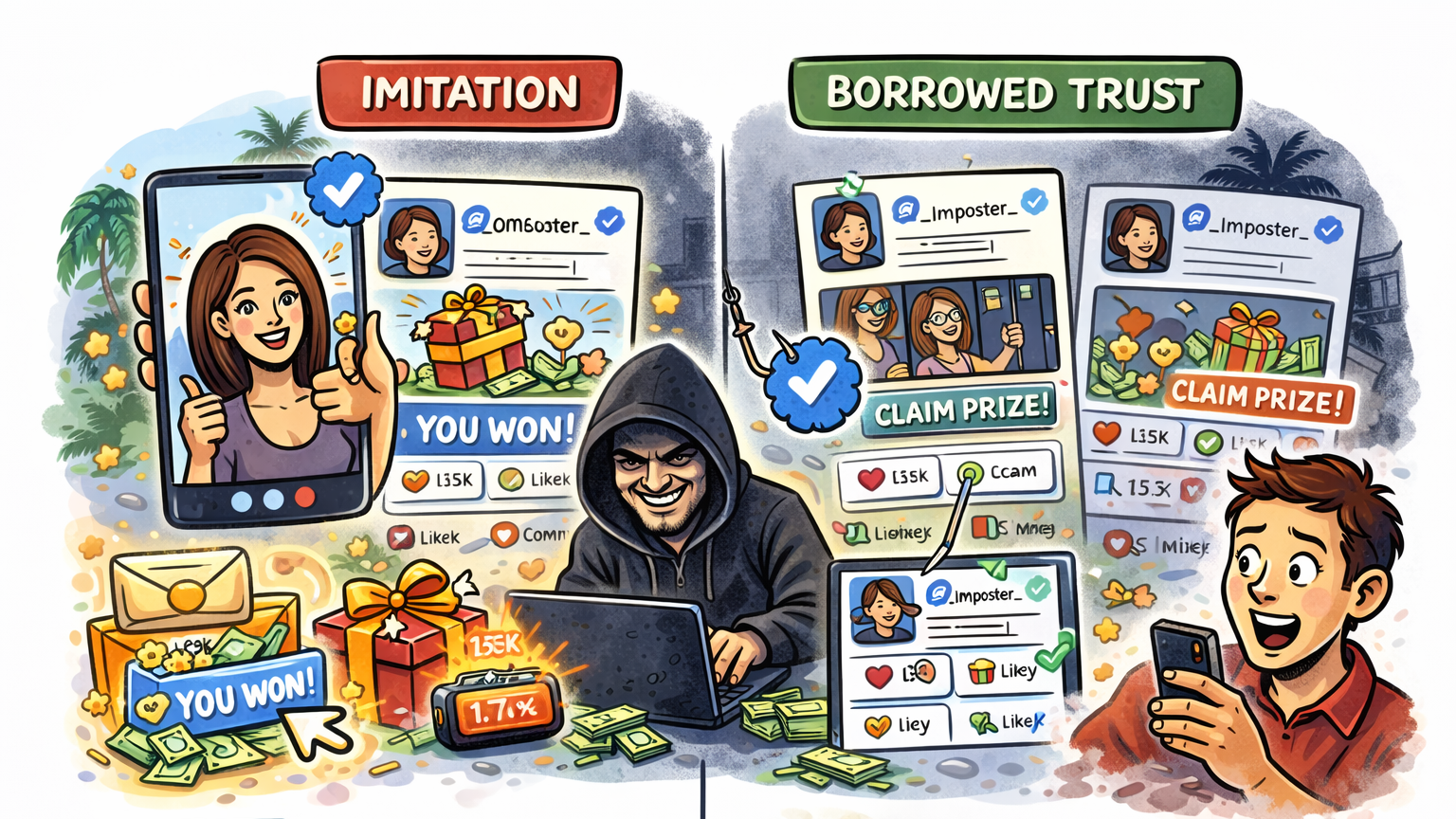
The argument seems reasonable, not haring, to a victim, since such a person was the one to publish it, therefore, it must be real. That is precisely the scammer belief. When someone with a familiar face recommends something, people immediately cease to think critically- thus, the scam will not seem risky to them. It is why influencer-based scams are so effective: since they do not allow you to make proper judgment, they instead rely on the borrowed trust.
Common Types of Giveaway & Lottery Scams
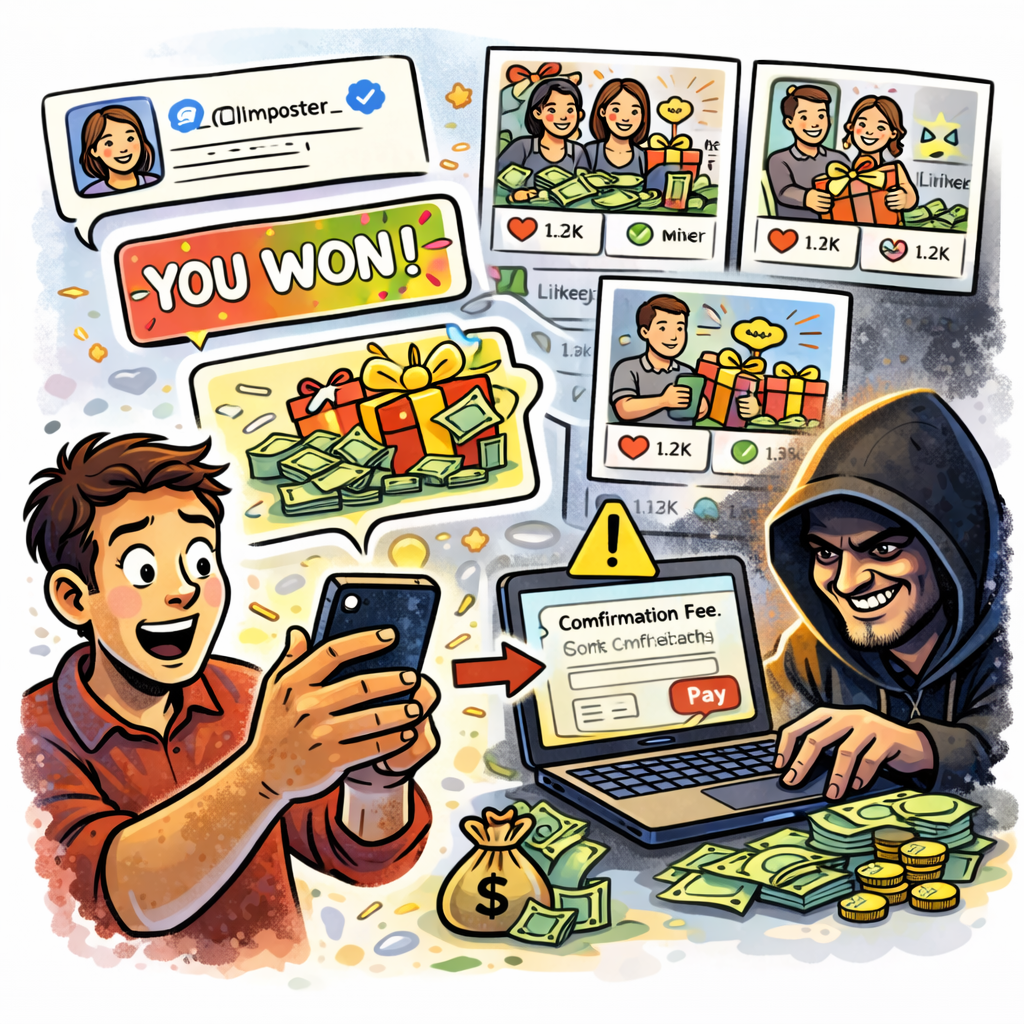
1. Fake Influencer Giveaways
– DM saying you won
– Asks for shipping or confirmation fee
– Fake screenshots of winners
2. Lottery & Lucky Draw Messages
– “Your number was selected”
– “International lottery winner”
– Claims you never entered
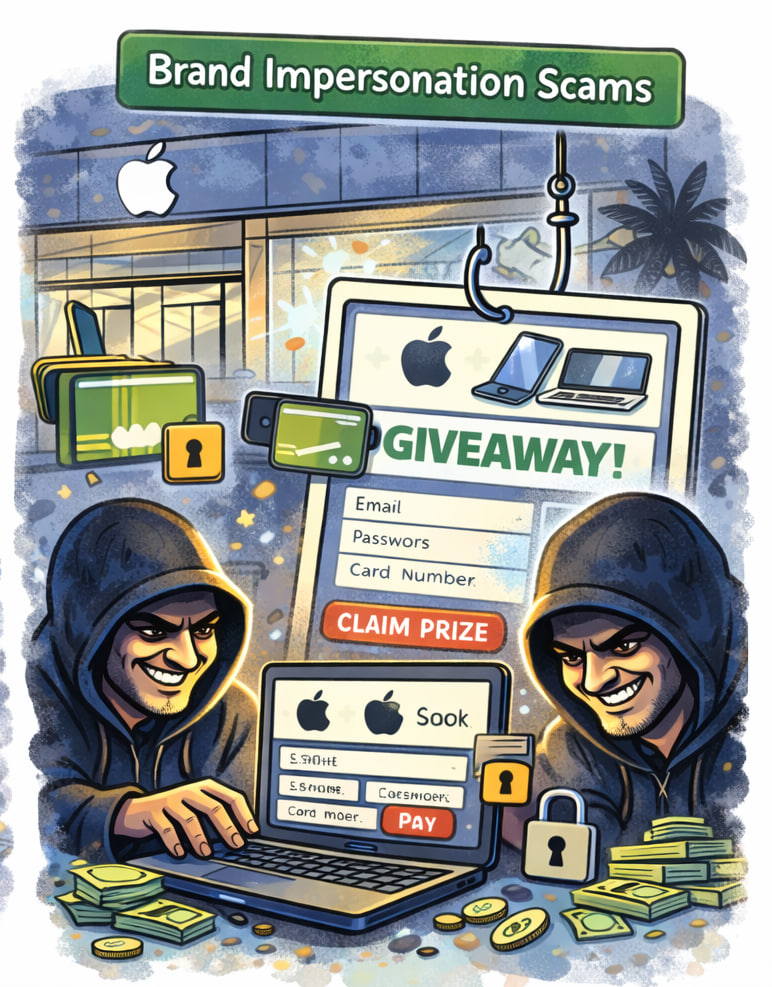
3. Fake Brand Prize Scams
– Free iPhone / laptop offers
– Brand logos copied
– Fake customer support chats
4. Link-Based Claim Scams
– Link takes you to fake website
– Asks for login or card details
– Data stolen instantly
These scams succeed not because they are complex, but because they exploit excitement, speed, and assumed legitimacy before critical thinking has time to intervene.
Why Smart People Still Fall for These Scams
These scams succeed by misleading individuals. They achieve success by challenging perceptions. They take advantage of feelings that can quickly distract us from logical thought: the thrill of an unexpected victory, the shock that requires our immediate focus, the confidence we gain from well-known brands or influencers, and the anxiety of potentially missing out on something unique or urgent.
Scammers intentionally generate a sense of urgency to eliminate any pause, verification, or opportunity for a second opinion. The aim is to take action before any doubts can arise. Being smart will not shield you from this—it is discipline that will.
Why These Scams Are Growing Rapidly in India
India has emerged as a key focus because of its vast scale, easy access, and seamless payment options. Social media is widely used, and giveaways have become a common practice on various platforms. This generates a steady flow of possible targets. The threshold for starting these scams is very minimal. All you need is a phone and some basic social abilities, no expertise in technology, infrastructure, or funds necessary.
Instant payment systems like UPI simplify the last step completely. Little sums seem innocent, move swiftly, and are tough to bring back once given away. This mix allows for quick and lucrative high-volume fraud.
Red Flags You Should Never Ignore
There are some common indicators that appear in nearly every giveaway and lottery scam:
– Any demand for payment to receive a prize
– Messages that exhibit weak grammar, a hurried tone, or an awkward sense of urgency
– Absence of confirmation via an official site or authenticated profile
– Messages from profiles that resemble others or have been created recently
– Urgency to take action right away or face the chance of missing out on the reward
This guideline clears things up: if you need to pay money, provide personal information, or keep things hush-hush to claim a prize, it’s a scam.
How to Verify a Giveaway Safely
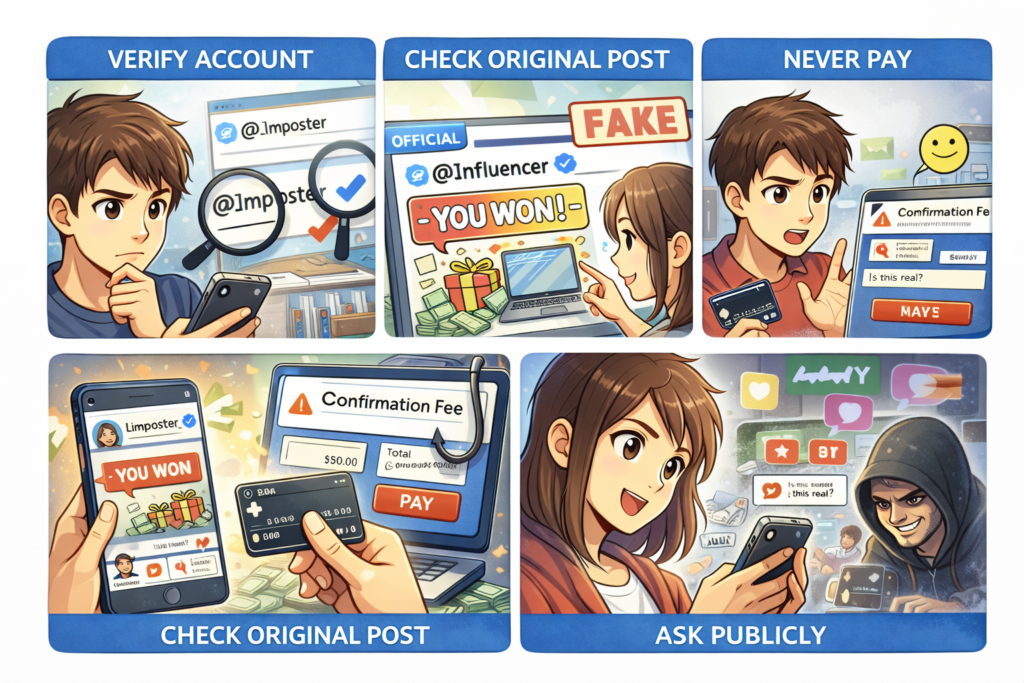
Approach each giveaway as a statement that requires verification, rather than simply accepting it at face value. To start, check the official account. Make sure to verify the username for any slight misspellings, look over the follower history, assess posting consistency, and check for confirmation badges if relevant. Fraudsters frequently use names that resemble legitimate ones and set up new profiles.
After that, find the initial announcement for the giveaway. Real giveaways can be found openly on the brand’s or influencer’s main feed or official website, rather than being sent privately through unexpected direct messages. Do not spend money to achieve victory. Genuine giveaways do not come with shipping costs, processing fees, or any need for verification payments. Once money enters the picture, the giveaway loses its authenticity.
Make sure to pose your questions in the comments section of the original post for everyone to see. Scammers tend to stay out of the spotlight and frequently turn off comments or shift discussions to private messages. Making things visible helps uncover fraud swiftly.
It only takes a few minutes to verify. Getting back on your feet after a scam can be a lengthy process.
What To Do If You’ve Been Targeted
- Don’t reply further
- Don’t click links
- Block and report the account
- Warn others via comments
- Report to cybercrime portal if money lost
Early action can stop others from falling victim.
The Bigger Issue
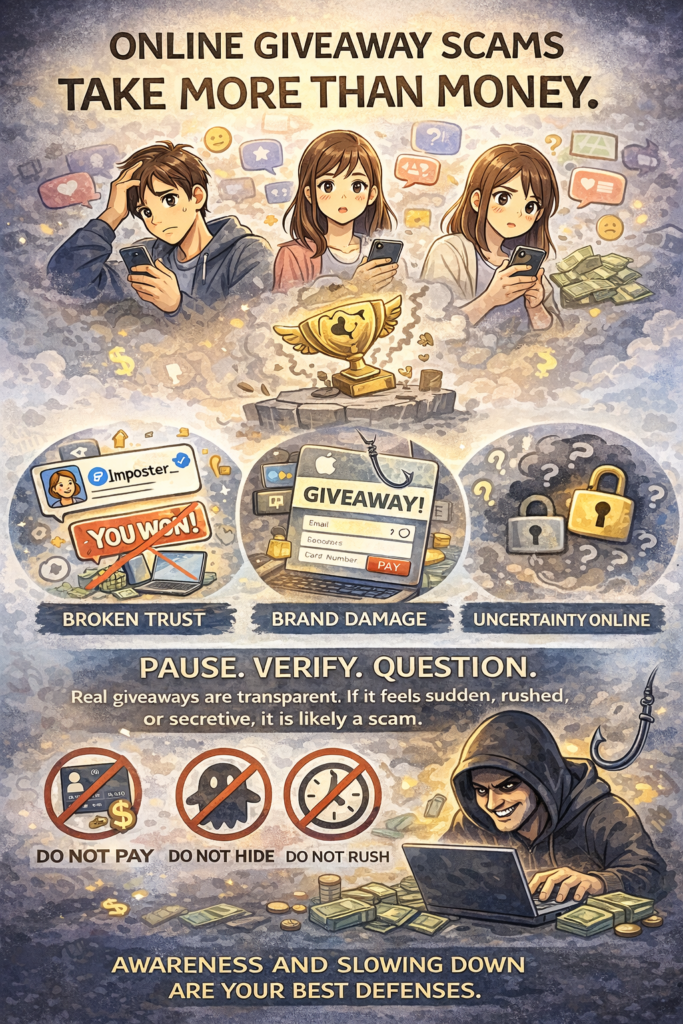
Giveaway and lotto scams do more than just take your money. They slowly hurt the trust between influencers and the people who follow them, hurt the reputation of real brands whose identities are used fraudulently over and over, and make people less confident in digital places. Over time, this makes the internet a place where doubt takes the place of interest and even real possibilities are questioned.
Scammers like things that are fast, loud, and exciting. Because most victims do not say anything because they are embarrassed or angry, the same tricks can be used on thousands of other people. The cost is not just loss for each person; it is damage to the internet’s reputation as a whole.
My Honest Opinion
There is no cheap prize that is worth your safety, privacy, or long-term peace of mind. One important thing that makes real gifts boring is that they are clear. They are made public, stored on official sites, and simple to check. Winners are never rushed, told to keep their information secret, or asked to pay at any point.
If winning seems sudden, easy, and too much for you mentally, stop. Scammers plan for people to respond that way. Real benefits do not need to be pushed to feel real.
Final Thoughts
There are more influencer giveaways and lotto scams because they mix trust with temptation and make people make decisions faster. When fun takes the place of proof, even experienced internet users are open to attack. Being smart in the modern world means being careful. Wait before you celebrate. Check before you click. Before giving out information, ask questions. Also, keep in mind that paying to “win” is not a chance, it is a contradiction. Scams work by being quick and quiet. Being aware slows them down. When you speak up, you bother them. The very act of critical thought stops them.
The most important thing you can get online is not something that people tell you you have won; it is knowing how to spot a fake game.
