
 TrendPedia
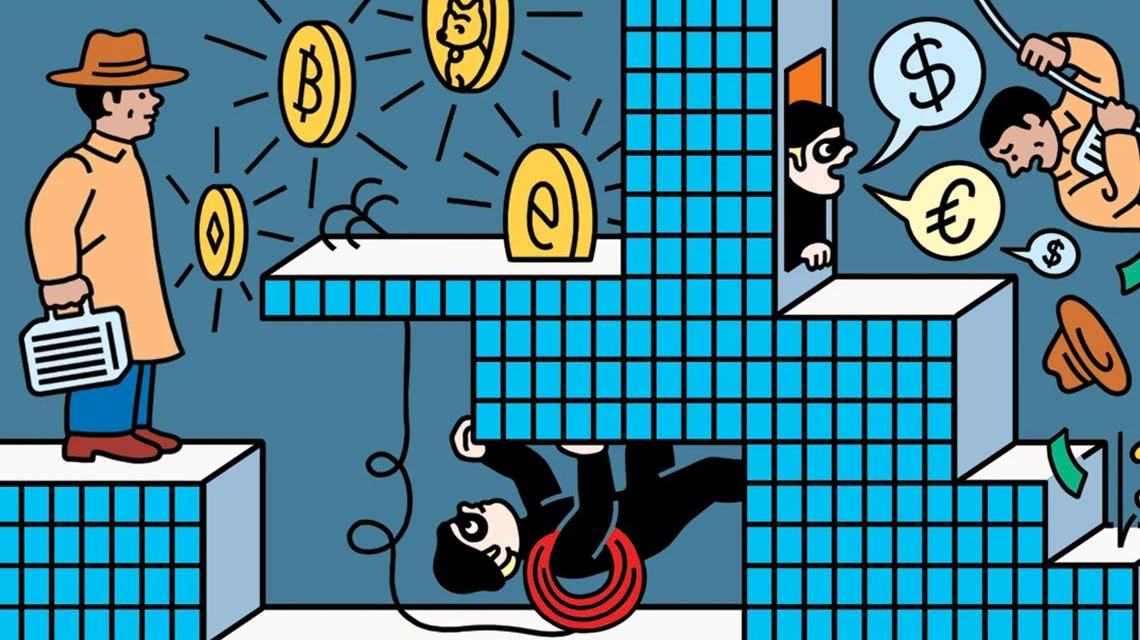
 Investing online has never been as quick, easy and accessible as it is. In a few taps anyone can browse stocks, crypto, forex or high-return opportunities on their phone. The convenience has left, however, a flawless loophole to fraud.
By the year 2025, fraudsters are resorting to artificial intelligence to create very believable fake investment plans. These are not traps and sloppily written messages. They are accompanied by refined websites, lifelike dashboards, AI-created advisors, faked voices, and expert communication which is valid at each level. Even very careful and seasoned users are being drawn in. It is the threat of the reality of things. The warning signs that people used to be dependent on are eliminated with the use of AI, and thus, fake investments can merge with the real ones.
The blog distillates the mechanism by which investment scams run by AI work, why they are proliferating so fast, and what you should understand to keep your money before it is too late to act.
What Are AI-Based Investment Scams?
AI investment scams are fake frauds where AI is applied to highly simulate a believable financial site, broker, and investment case study. Rather than coming out with promises that are too good to be true or unprofessional arrangements, scammers will fabricate whole experience of investment that appears professional and believable.
They use AI-generated messages that sound like they know what they are talking about and are profitable, artificial profit dashboards that display steady profits, artificial video calls and voice chat that replicate a real expert, and automated chat advisors that reply immediately with assured financial advice.
Everything to the victim is organized, knowledgeable, and legal. There is a gradual development of trust because the screen numbers increase. The reality will only sink in after withdrawals are postponed, frozen or conditional on new charges, at this point the money is already stolen.
Why These Scams Feel So Trustworthy
Professional presentation
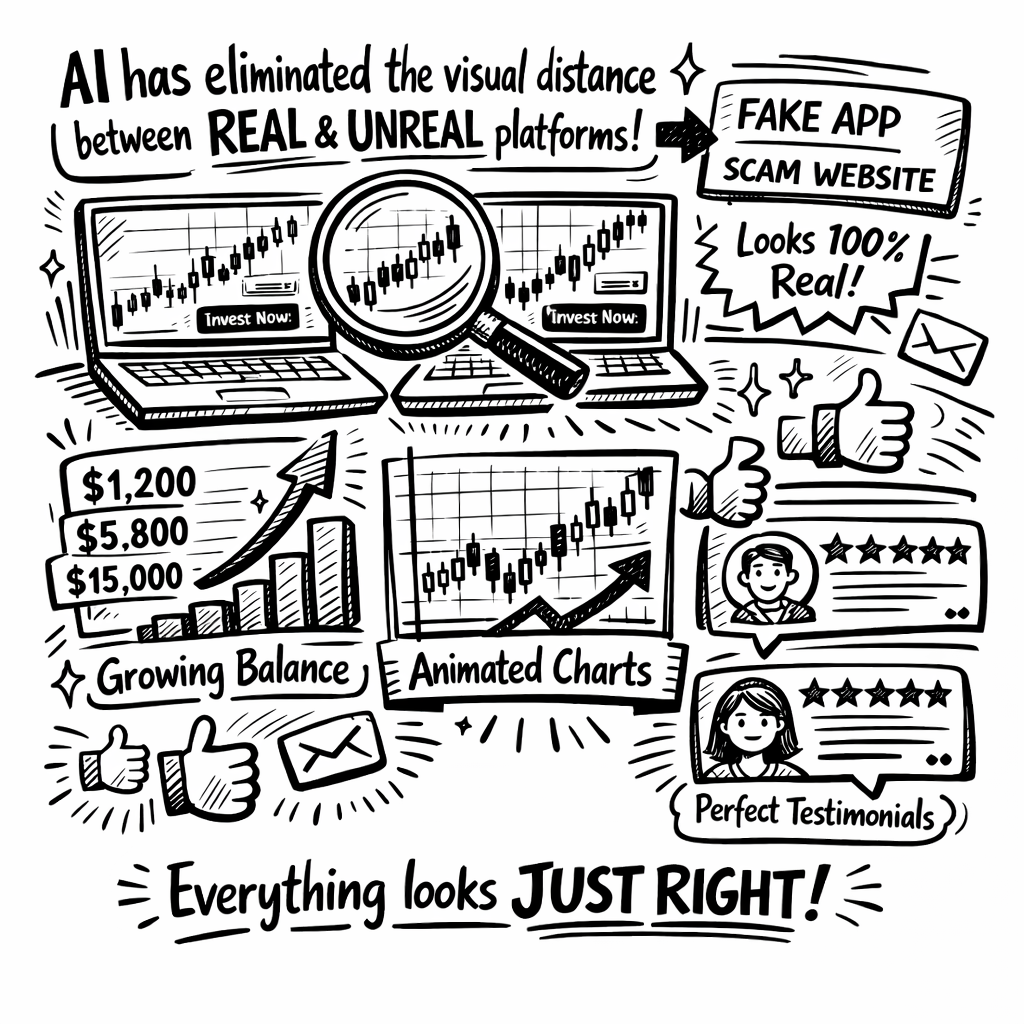
AI has eliminated a visual distance between the real and unreal platforms. Fraudulent applications and websites now appear exactly like a real dealing interface. The charts are animated, balances are increased gradually, and testimonials are positioned at the right place at the right time. There is no sense of out of place, and this reduces suspicion even before the first encounter.
Personalized communication
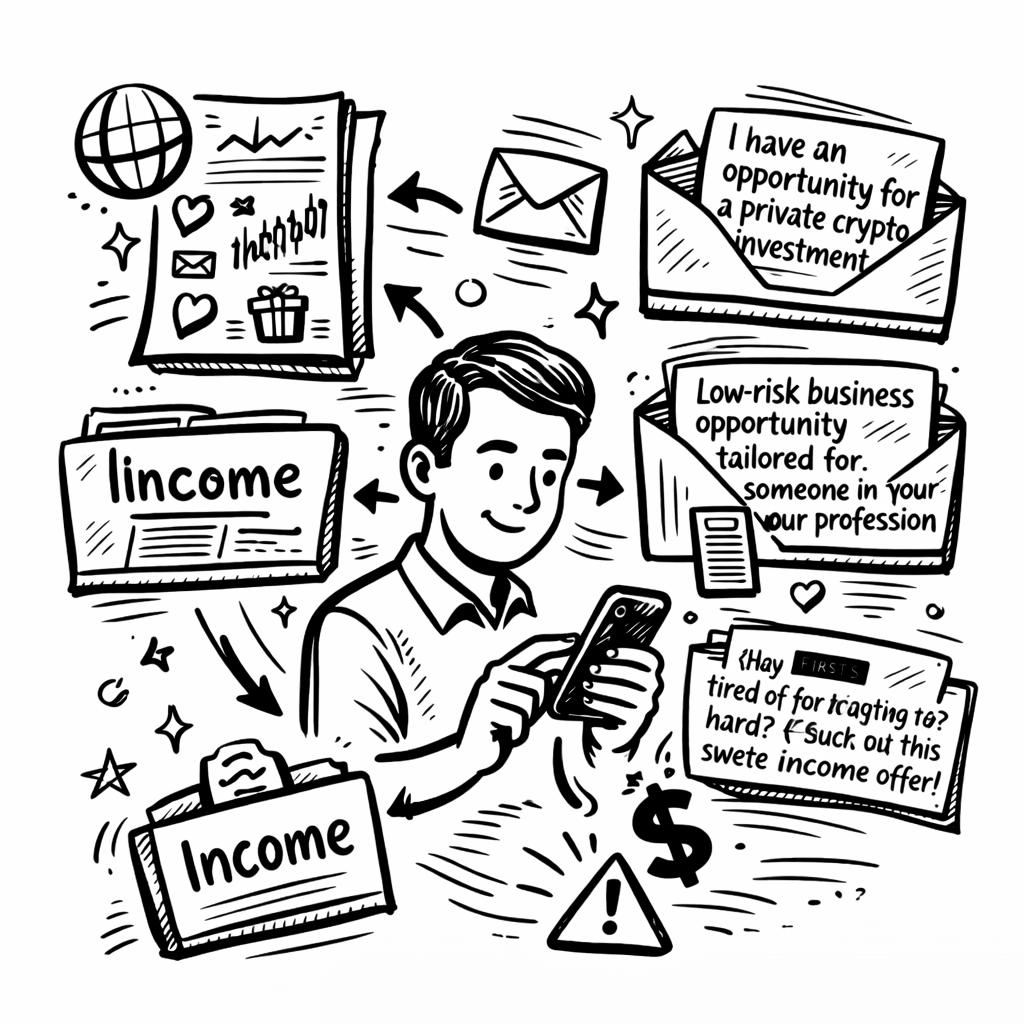
The scams today are not made on generic tones. AI examines your interests, income, riskiness and online behavior and sends you messages that seem oddly specific to you. There is something designed with you in mind in the opportunity even harder to disregard, and easier to believe.

Fake success stories
Fraudsters create social proof. They present edited profit screenshots, AI-generated influencers or investors and fake reviews or comments that seem to be organic. Doubt disappears when people find people winning. Social evidence is the last driver which makes the victims invest.
The combination of these elements results in a perception of the legitimacy, logical, researched, safe, which is not always the case.
Common AI Investment Scam Types
Fake Crypto & Trading Apps
Such frauds are based on the frail-looking applications or websites. The dashboard demonstrates consistent profits on a daily basis and early withdrawals might actually serve to develop confidence. When trust has been built, the victims are advised to invest bigger sums. That is when the account abruptly freezes, withdrawals are not possible, and support is unable to be seen.
WhatsApp / Telegram Investment Groups
The victims get added to the groups in which a so-called expert tells them tips on trading. Initial returns are presented, and the members of the group seem to be cashing in on steady returns. As a matter of fact, the majority of such profiles are bots or a part of the scam. When deposits of larger quantities are transferred, the money disappears- and the organization is frequently closed down at night.
AI Video Scams
Fraudsters present artificial or doctored videos of famous people, corporate figures, or investment gurus where they promote an investment with high profits. The recognition and authority of these faces make the offer sound out as believable, yet the endorsement is entirely unauthentic.
AI Chat Investment Advisors
Chatbots are automated and represent themselves as professional advisors, who are available 24/7. They are helpful and supportive to questions, provide reassurance when doubts arise and gradually encourage the users to spend more money. The communication is encouraging and educated–but they are meant to lead the victims further down the rabbit hole of the scam.
These frauds are not based on a single trick. They are realism, repetition, and emotional manipulation, that is, once trust is built the loss seems unavoidable.

Why Smart People Fall for These Scams
Due to the fact that scams do not appear as scams anymore. The apparent danger indicators have been eliminated. What remains is a system that is to be rational, nurturing and secure. These are schemes which are intentionally abusing:
Greed – the assurance of abnormally high or easy returns.
Fear – coercion, such as the use of limited time or the other option of not missing out.
Trust – the illusion of professional mentoring and guidance.
Confidence – alleged low-risk or tested strategies.
Logic must be pushed aside when emotion comes into play. It is when even intelligent and prudent individuals make judgments that they would not usually make.
Why India Is a Major Target
An investor base with a high rate of growth
Millions of new investors in India are getting on to digital markets via apps and online platforms, and many of them have not been exposed to financial risk before.
Limited financial literacy
Most users are not very knowledgeable about market volatility, risk management or the fact that there exists no guaranteed returns. Scammers also take advantage of this body of knowledge gap by offering something that is not certain.
India has become an easy target of AI-fueled investment fraud due to its size, velocity, and lack of experience.
Red Flags You Should Never Ignore
- Guaranteed or fixed returns
- Pressure to invest immediately
- No verifiable registration or regulatory details
- Communication limited to WhatsApp or Telegram
- Withdrawals blocked unless you “upgrade” or pay additional fees
Here’s the simplest rule: if it sounds too good to be true, it isn’t an opportunity – it’s a scam.
How to Protect Yourself from Investment Scams
Believe in no assured returns – It is no risk-free profit. All legitimate investments are subject to uncertainty. The moment returns are assured or assured, then you are not invested, you are being defrauded.
Verify platform legitimacy – Reviews and check registration details, the official site, and the reviews of reputable sources, before investing. Do not use links or documents distributed by the promoter – those can be fake.
Social media investment tips to avoid
Authentic financial advisers do not spam users with cold messages or operate an investment scheme via WhatsApp, Telegram, or comment box. When an individual is pursuing you to invest, it is in itself a caution.
Do not post financial screen shots
Common scammer tricks to create a deceptive history of success and control the credibility – yours and others – include screen shots of balances, profits or bank statements.
Before making an investment, consult someone.
A second opinion uses reason to make an emotional choice. Most of the scams fail immediately the opportunity is told to another person.
What To Do If You’ve Been Scammed
Cease the money transmition at once.
Store all the conversation, record of transactions and proofs of payment.
Report to your bank immediately.
Fraud incident: Report on cybercrime portal.
Take a caution to others lest they fall into the same snare.
Timely intervention will not reverse all that -but it can help to restrict the harm and contain the scam.
The Bigger Picture
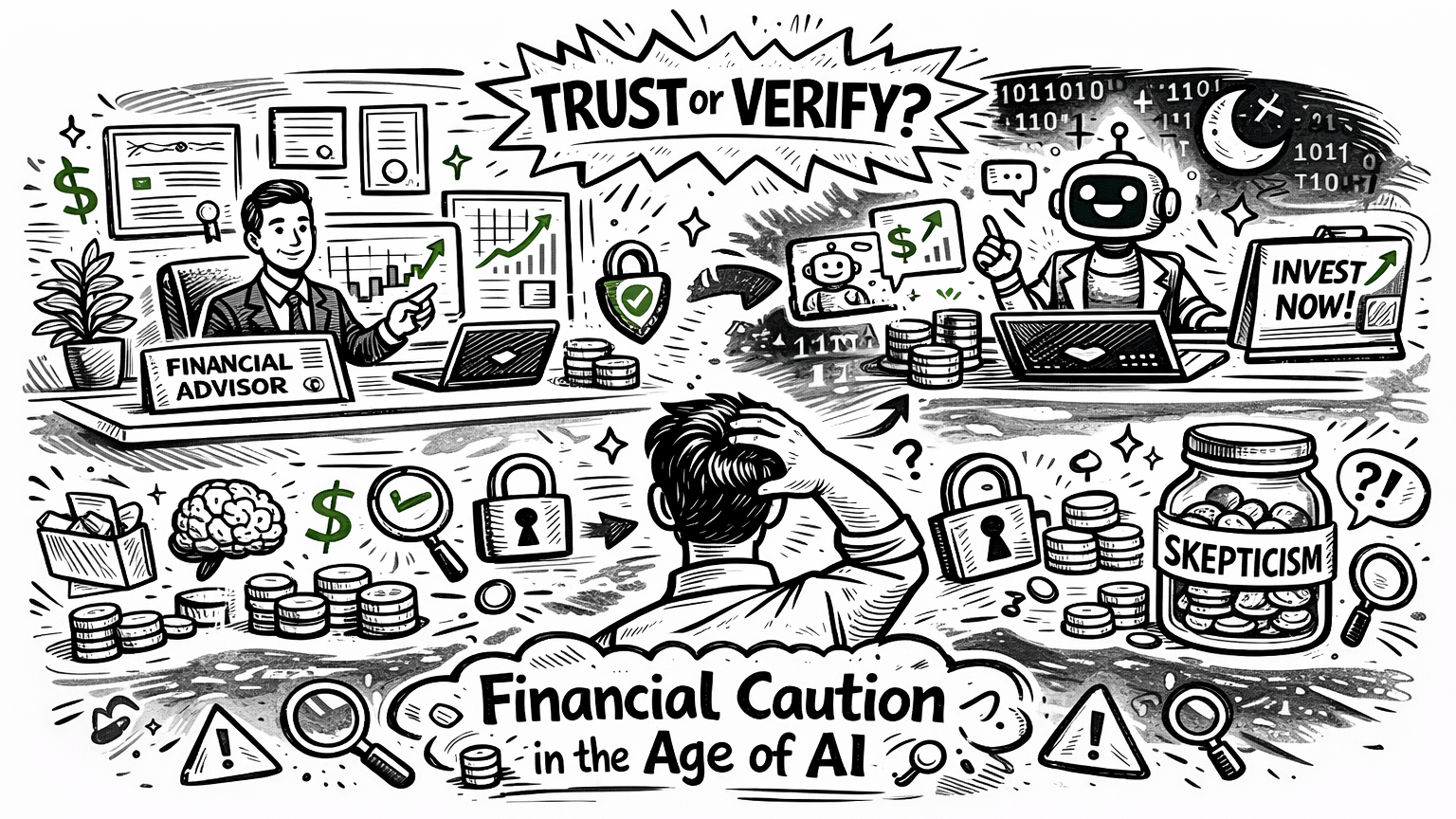
AI has essentially made the distinction between genuine and counterfeit financial guidance unclear. Things that were needed to be credentialed, have offices, and be accountable can now be convincingly simulated using software. The latter makes deceiving more accessible than ever–and catching more difficult than the majority of people think. It is not the technology that is the enemy. It is the blind faith in systems that it no longer has the right to be trusted. Professionalism is no longer a skill, but an automated process, and skepticism is not a vice.
Financial ambition without financial awareness is perilous in such an environment. It is a healthy desire to make your money work, but it is now that you need growth, patience and will to ensure that before you commit your money to investment, you first get to know.
My Honest Opinion
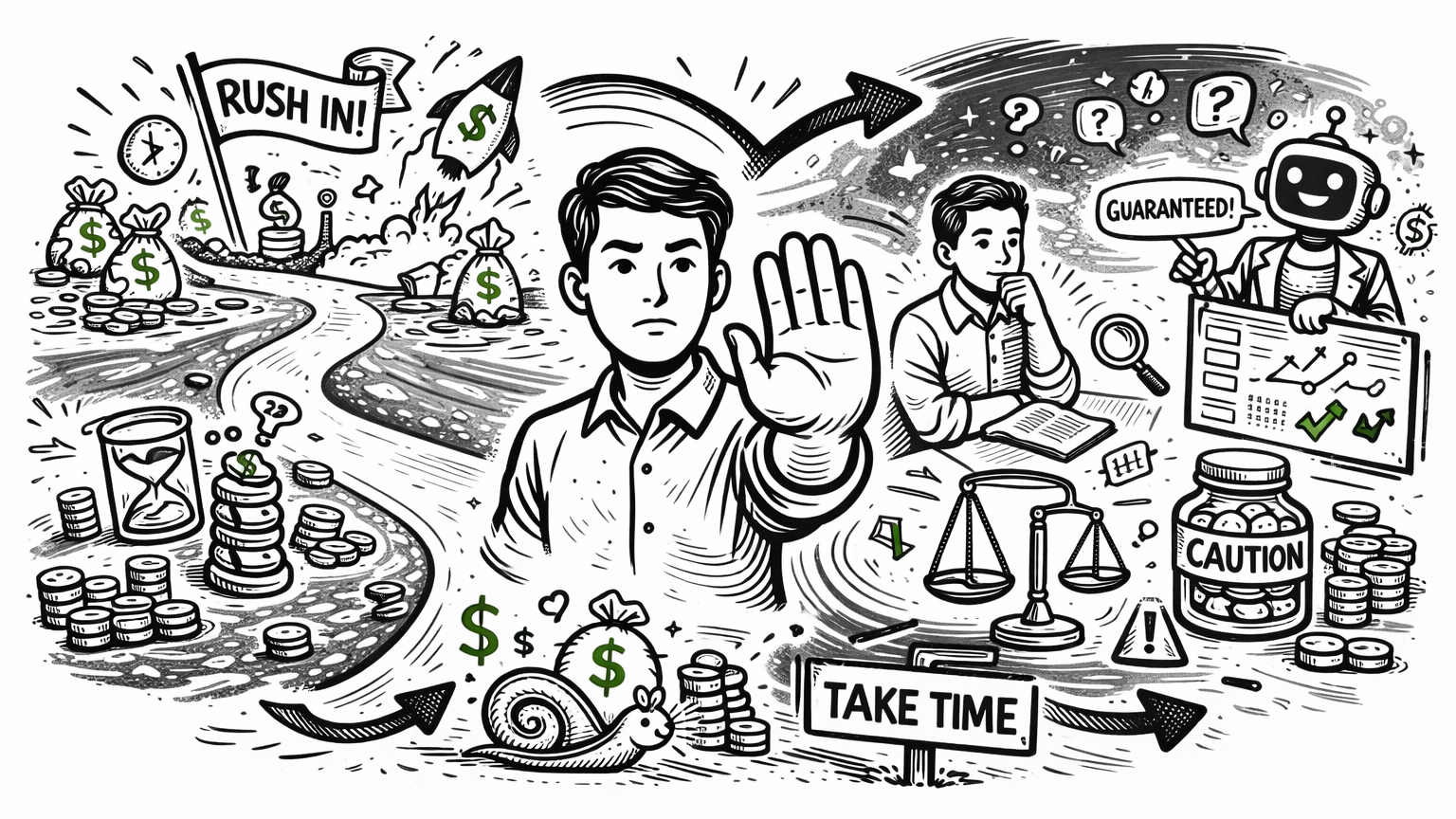
Investing is never a thrilling affair. It is slow, disciplined and most of the times uncomfortable since it makes you have to accept uncertainty. That is the way legitimate wealth is made – by research, patience and time, not emotional upheavals. Scams flip this completely. They ensure investing is an urgent and thrilling and easy experience. They are offering certainty where there is no certainty and are hiding risk with confidence. It is not an opportunity that you are feeling the emotional rush, it is a red flag that you are being played with.
Financial success in the AI age does not only depend on the choice of the right assets. It is about mastering your own responses, doubting certainty and not doing it when you are pressured into doing it. Doubting is not frightened, it is self-protection.
Final Thoughts
The number of AI-based investment scams increases since these are talking to human emotions specifically, the desire to have a better future and fear of being left behind. They do not make you think, they drive you to act. And in that hurry even wise, prudent folk make expensive choices.
Actual investing does not require haste. It gives time to doubt, research and second opinion. When an opportunity urges you to act hastily, obscures the threats or guarantees success, then it has already left the arena of legitimacy.
With AI beginning to blur the distinction between real and fake, it becomes the responsibility of the individual. You need more than zeal now to safeguard your money; you need discipline and cynicism and the readiness to walk out on anything you do not understand sufficiently.
There are no shortcuts. There are no guarantees. There is always risk.
Be patient and respect your money. In a speedy, hyped-up world, the capacity to slacken down can be your greatest monetary benefit.
