
 TrendPedia
 Fake customer support scams are rising. Learn how fraudsters impersonate helplines and how to stay safe while seeking help.
Once an issue arises with a payment application, bank account, or other online service, the majority of individuals engage in the same activity: they seek the assistance of a customer. It is logical, it is something significant and it is not dangerous. After all, help is available. Fraudsters understand how to exploit this habit, and they do it on a regular basis.
One of the top online frauds is expected to be fake customer service and hotline fraud in 2025. Greed or excitement does not make the victims get sucked into the game, it is confusion, worry, and actual need to correct a situation. Fraudulent helpline, counterfeit agents and sponsored search results tend to trap individuals when they are at their weakest point.
These scams might be particularly hazardous because they appear to be reputable businesses. Fraudsters will masquerade as banks, online payments, cell phone companies, and well-known applications. They steal your personal information or money with the help of professional vocabulary, counterfeit identification procedures, and haste. The loss of money does not occur when people attempt to win rewards, but when they attempt to secure their accounts.
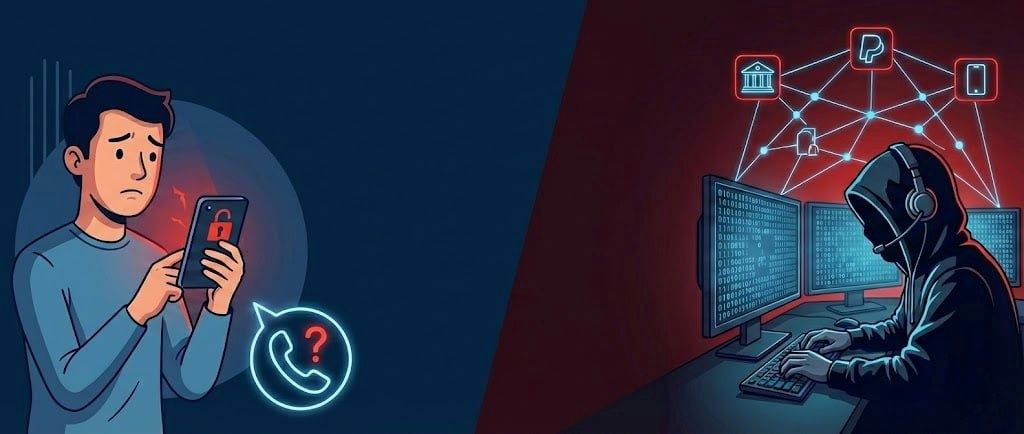
This essay describes the mechanism of false customer support scams, why they are so effective and the red flags that most of them lack when they are stressed. And how this help as a weapon is used, and how you may be confident that the assistance you receive is not a sham.
What Are Fake Customer Support Scams?
Fake customer care scams happen when criminals pretend to be official help channels for services that people trust. They pretend to be customer support reps for banks, online stores, digital wallets, UPI apps, phone companies, or utility companies. Most of the time, these scams start when people are already stressed, bewildered, and looking for help. Fraudsters take advantage of this time by putting themselves in places where victims expect to get real help.
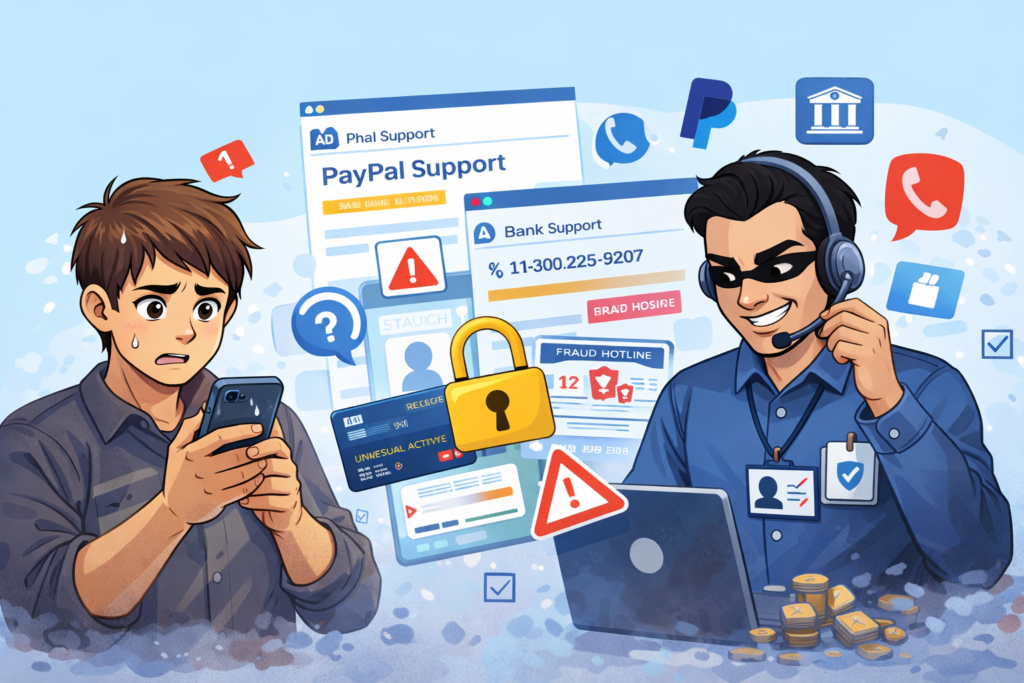
Some common strategies are:
– Putting phony hotline numbers on social media and search engines
– Putting fake figures in the comments of official posts
– Sending messages that say they are “urgent support alerts”
– Sending people to phone or chat with fake agents
When you talk to the bogus agent, they sound professional, calm, and helpful. This is on purpose. The idea is to swiftly create trust before leading the user to do something that will cost them money or put their data at risk. These frauds are especially hazardous because they look so much like real customer service, which is when individuals are least likely to stop and check.
How These Scams Usually Start
Fake customer support scams are made to catch people right when they are looking for help. Most of the time, there are two ways to get in.
1) Traps in search engines
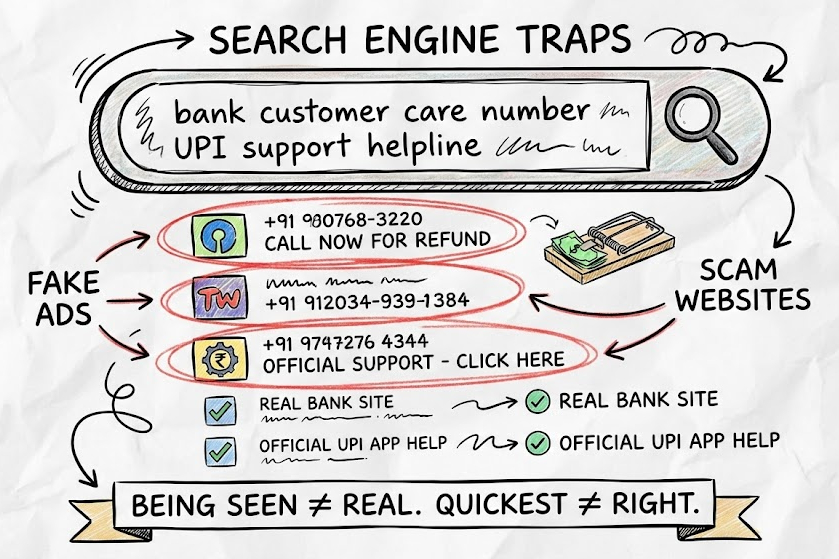
Scammers bury themselves in the first results that individuals get when looking up “bank customer care number” or “UPI support helpline.” They do this by placing fake numbers on poorly made websites; or by paid advertisements featuring bogus help lines; or by creating websites that look like real support pages. People believe these results are genuine because they are on the top.
The main trick is that being seen is not the same thing as being real. The quickest response is not necessarily the right response.
2) Is responsible for social media support
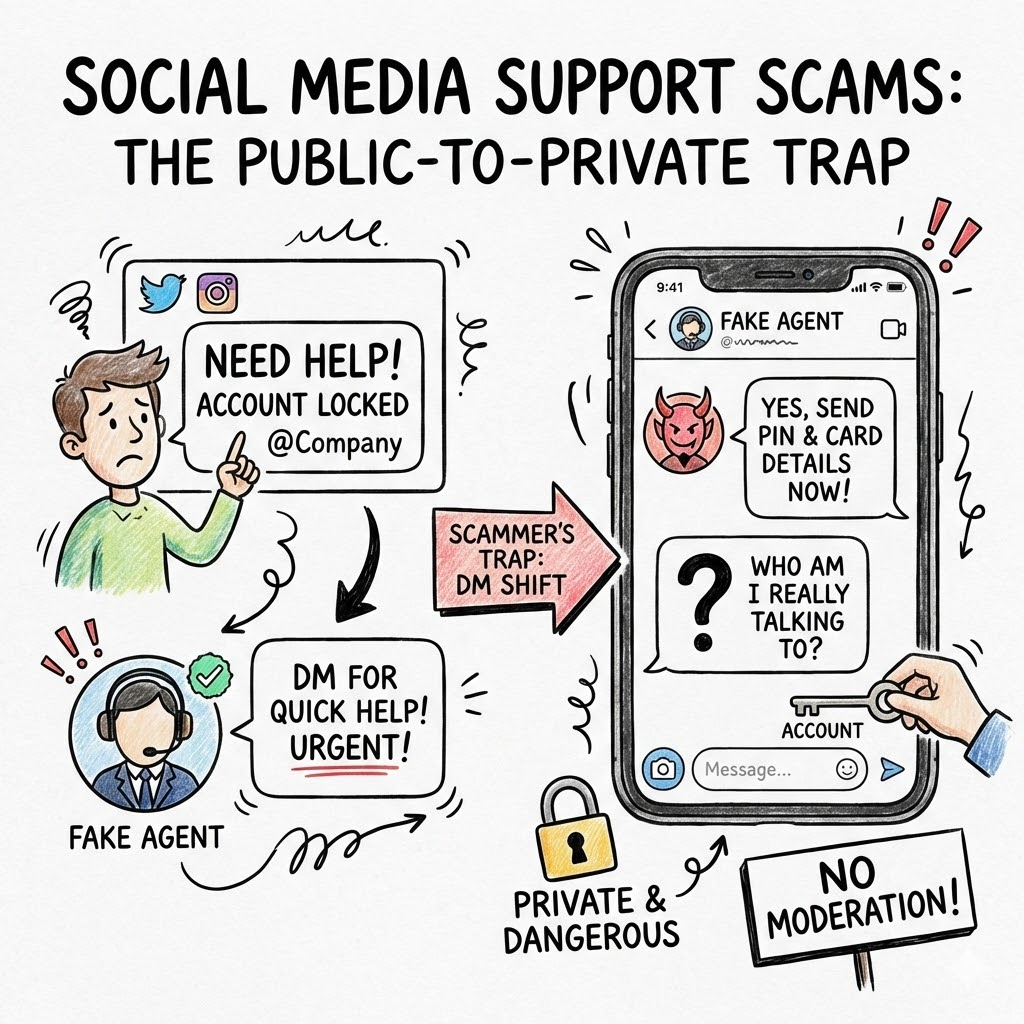
Scammers also create fake accounts of customer service on platforms such as Twitter, Instagram, and Facebook. These accounts monitor watch posts when people ask for help/complain in public. They respond promptly to twittering, commenting and posting from ‘DM for help’ The deceit is only furthered when the conversation shifts to private messages.
The transition between public and private is planned. It takes out the responsibility, skips the moderation, and allows scammers to have a complete hold of the conversation. Both of these tactics use the element of urgency and false confidence to catch people off guard and saying, ‘who am I really talking to?’
What Happens After You Contact Them?
Once connected, the fake agent:
- Sounds polite and confident
- Claims to “verify your account”
- Creates urgency (“Your account will be blocked”)
Then asks for:
- OTP
- Card details
- UPI collect approval
- Screen‑sharing access
That’s when money is stolen.
Common Fake Helpline Scam Scenarios
Bank Account Issue Scam – Victim calls a fake number and is guided to approve a UPI request.
E‑commerce Refund Scam – Fake support promises refund but asks for “confirmation payment”.
Wallet / UPI Support Scam – Agent claims reversal is pending and requests OTP or PIN.
Remote Access Scam – Victim is asked to install an app to “fix the issue”, giving scammers control.
Why These Scams Are So Effective
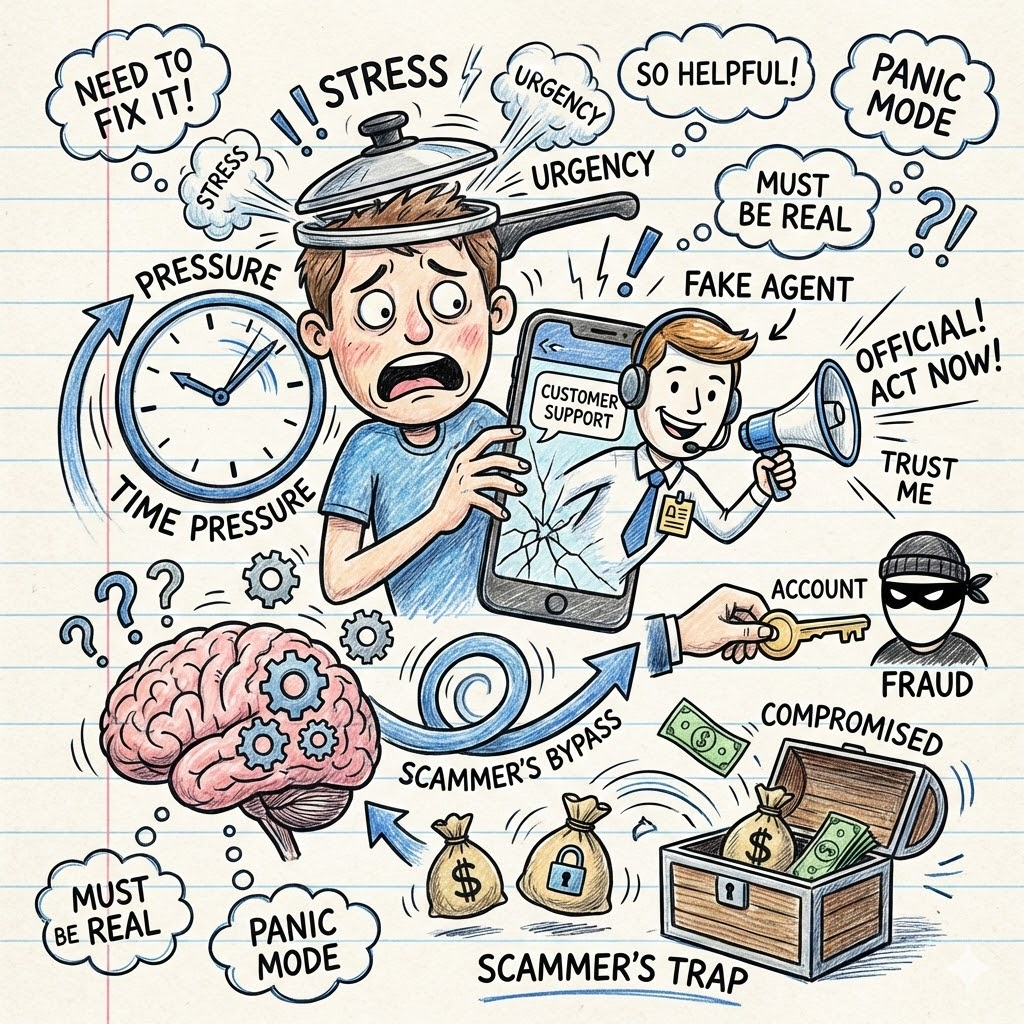
Scammers who pretend to be customer service agents are successful because they strike at the worst possible time. Victims are already anxious, trying to fix a problem, and working against the clock. People are more likely to trust someone who seems confident, knowledgeable, and helpful while they are in that state. Scammers don’t use reasoning; instead, they use urgency and perceived authority to get around it.
When the encounter seems official, people do what they are told, even if they would ordinarily question it, because they think they are defending their account instead of hurting it.
Why Indian Users Are Targeted More Frequently
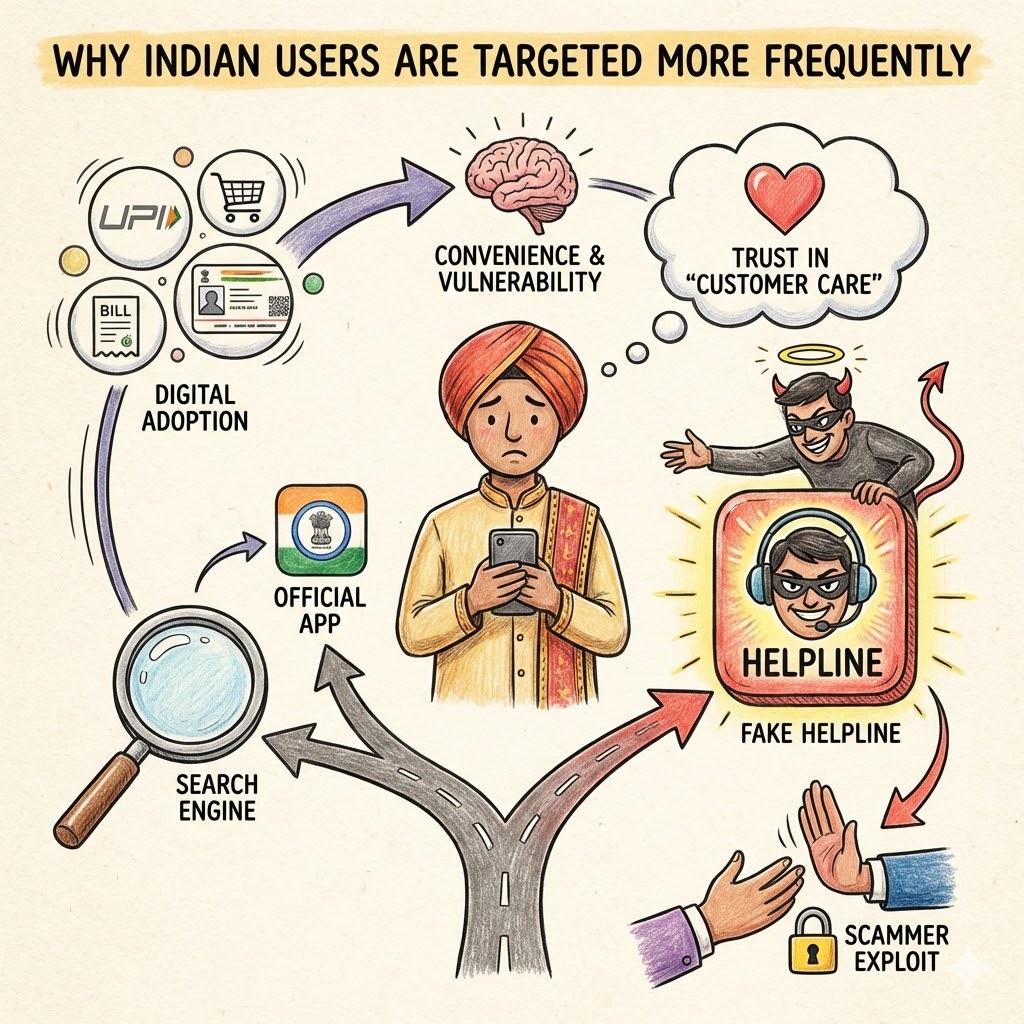
India’s use of technology has made things easier and more dangerous. Most banking, shopping, paying bills, and verifying your identification are done online, which makes people more reliant on digital help. When something goes wrong, a lot of people automatically go to search engines instead than legitimate apps or websites. Because of this practice, it’s easy to trick people with false hotline numbers.
There is also a strong cultural belief on “customer care.” People think that support agents are safe, regulated, and looking out for their best interests. Scammers take advantage of that assumption very well.
Red Flags You Should Never Ignore
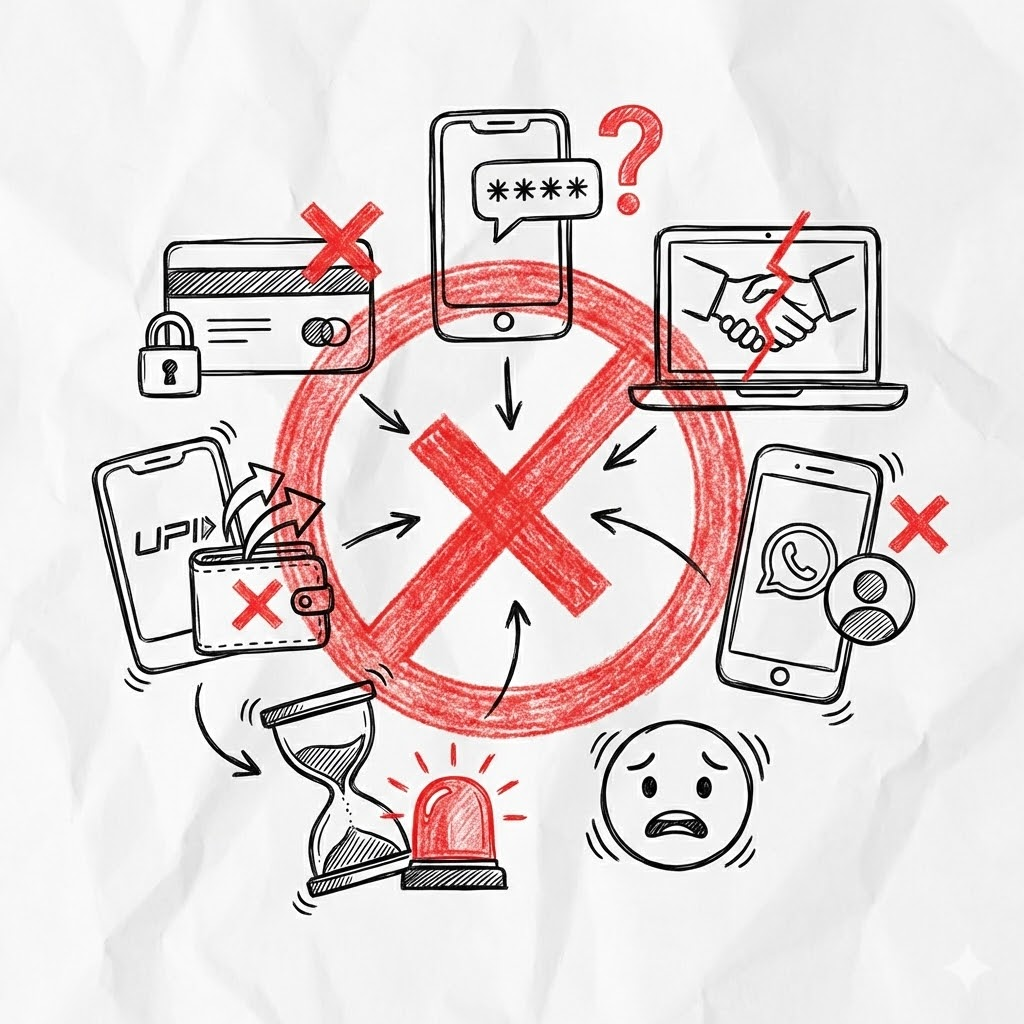
- Support asks for OTP or PIN
- Requests screen sharing or app install
- Asks to approve UPI “receive” request
- Uses personal WhatsApp numbers
- Pushes urgency or fear
Real customer support never asks these.
How to Find Genuine Customer Support
Use Official Apps & Websites
Open support only from > Official app > Verified website > Avoid random search results.
Check Verified Handles
Look for: Blue tick, Official domain links
Never Share OTP or PIN
Call Back Independently
What To Do If You’ve Been Scammed
If you think you’ve talked to a bogus customer service agent, quickness is more important than doing it right. Do something right away. First, stop talking to each other. Don’t answer any more questions, don’t follow any further instructions, and don’t try to “recover” money through the same contact.
Next, let your bank or the service provider that was affected know right away. If there is any chance of misuse, ask that cards, UPI access, or accounts be temporarily banned. Early warnings greatly increase the odds of stopping more damage.
Keep proof. Keep call logs, chat histories, phone numbers, payment references, screenshots, and any links that were sent to you. This paperwork is critically important for investigations and recovery efforts. As soon as you can, file a complaint using the official cybercrime reporting site. Reporting scams quickly helps the police find patterns and stops the same fraud from being used on other people.
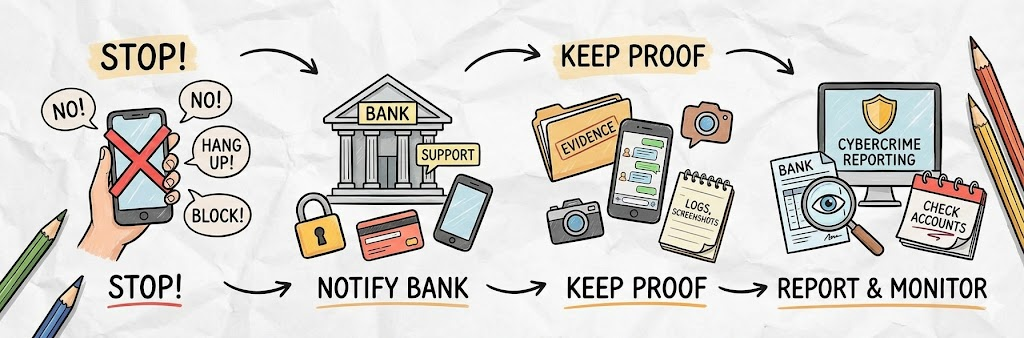
Finally, keep a watchful eye on your accounts for any strange behavior in the next few days. Quick, firm action can’t undo a hoax, but it can cut losses by a lot and stop things from getting worse.
The Bigger Issue
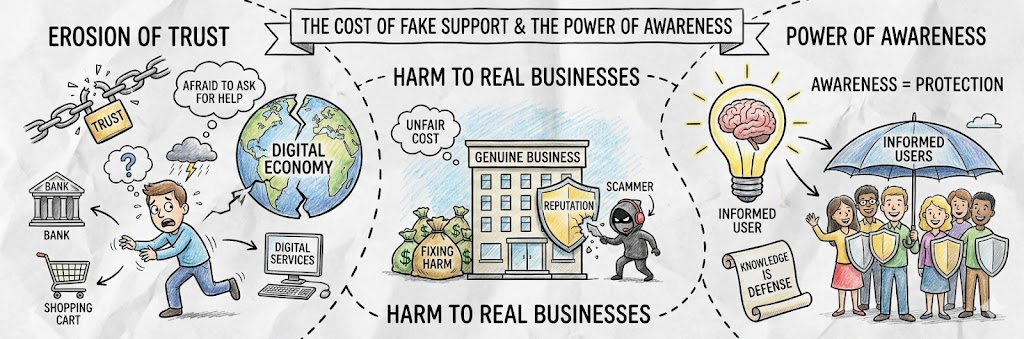
Fake customer service scams are bad for not just individual shoppers, but any and every digital economy. Every time a fraud works, the less people are likely to trust online banking, and digital services and e-Commerce sites that millions of people use every day. When people are scared of help channels, not wanting to ask for help or not wanting to use online systems in the first place, it causes more damage than just money. It slows down the adoption of new technology, makes things more difficult, and destroys the confidence in real institutions.
These scams also have an unfair impact on legitimate business. Banks, platforms, and service providers would have to spend more money fixing the damage on its reputation due to people criminals pretending it to be the actual business, when in fact the scammers have no real connection to the businesses.
Awareness isn’t just a personal safeguard; it doesn’t require many people to protect many people. As digital systems grow, the single most effective way to protect yourself from fraud that breeds on confusion and inflated confidence is to be informed.
My Honest Opinion
Customer service is there to lower risk, not raise it. It is meant to make people feel safe, knowledgeable, and in charge, not scared or coerced. If “help” asks for privacy, speed, sensitive information, remote access, or any kind of payment, it has gone from being supported to being a scam. Real help never needs to cut corners, be afraid, or follow rules to work.
Trust your gut if an interaction seems hasty or scary. Real help keeps you safe. Everything else is fake.
Final Thoughts
The prevalence of bogus customer support and helpline schemes is on the rise due to the fact that they prey on individuals at their most vulnerable when adversity has already occurred and stress levels are already elevated. During those instances, the impulse to expedite the resolution process frequently prevails over caution.
Trust must be earned, not presumed, in a digital-first world. Stop before accepting assistance from an individual who unexpectedly approaches you. Before disclosing information, verify the support channels through official applications or websites. Regardless of the urgency of the situation, it is imperative to refrain from hastily making financial decisions.
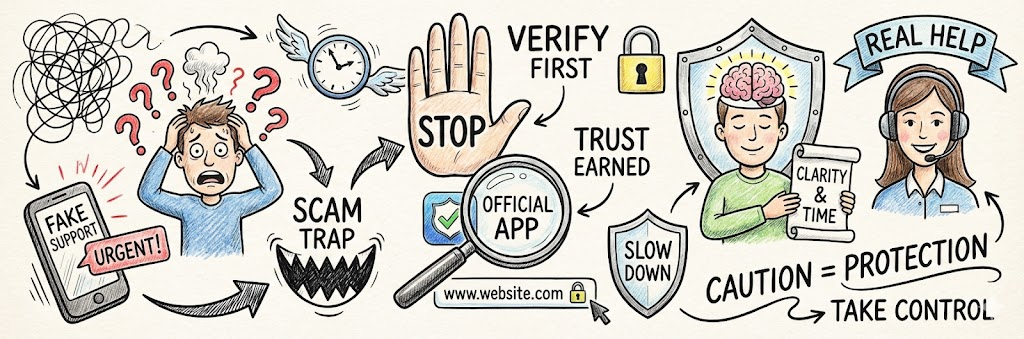
Genuine customer service provides you with options, clarity, and time. Pressure, fear, and obedience are the foundations of scams. Slow down and assume responsibility for the interaction when interacting with institutions, applications, or services. Protection is the objective of caution; it is not paranoia.

 AI Voice Scams in India: How Fake Calls Are Fooling Even Careful People