

 TrendPedia
 There has always been phone scams in India. We have been hearing about fake calls, lottery trick, and urgent bank warnings years ago. It is believed that a lot of people can identify these scams. Such confidence further increases the dangers of the new scams. AI has altered things under the radar. Fraudsters do not need hackneyed scripts or blatant lies. They even can copy a human voice today with terrifying precision, and the tone, emotion, and even the manner in which an individual panics or hesitates.
It is reported that in 2025 AI voice scams will be one of the most rapidly increasing digital threats in India. Strangers are no longer swindlers of victims. They are convinced by the voices which sound as parents, children, bosses or trusted officials. In order to understand the reason why lots of individuals become victims of these scams and what can be done to avoid them, we first must be aware of the mechanism of these scams.

What Are AI Voice Scams?
AI voice fraud is a novel form of fraud where voice-cloning technology is involved. Scammers have now resorted to using AI to imitate actual human voices with high precision instead of acting badly or threatening someone with the help of a script.
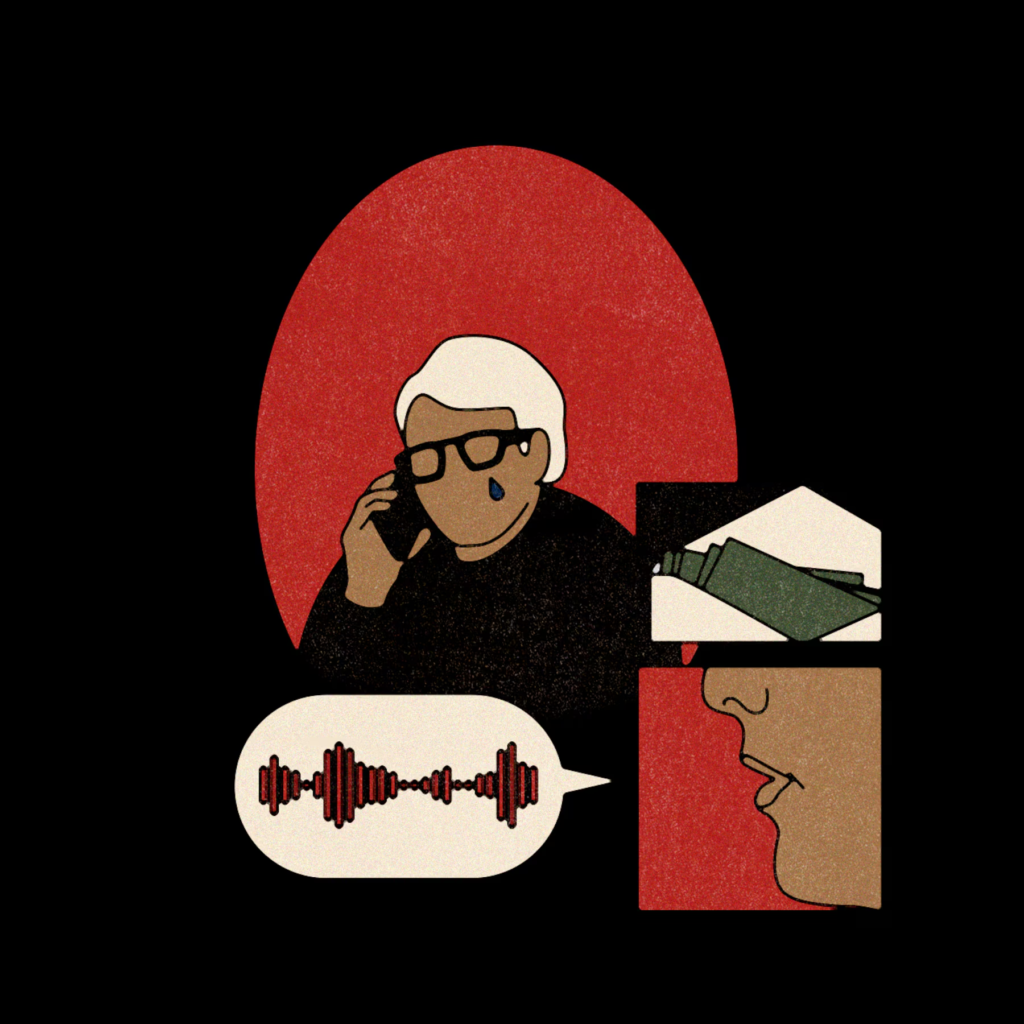
They only require a couple of seconds of sound. These samples are very readily available and they are usually collected in areas that the people believed to be secure, such as social media videos, Whatsup voice recordings, YouTube clips, interviews or even speech at a meeting. After the AI model has such audio then it can reproduce the voice in a way that it feels natural in terms of tone, rhythm and emotion.
The victim does not hear the voice of a stranger when the call comes in. They are listening to a familiar voice. It is there that the danger begins.
AI Makes Deception Sound Human
These calls do not sound robotic and hurried. They possess natural pauses, natural breathing, stress and natural talk. The fraudster does not need to provide facts; the voice does it all. That renders regular warning signs virtually worthless, even to individuals who believe themselves to be cautious or tech savvy. That is why AI voice scams are not similar to old-fashioned phone frauds. They do not count on your ignorance. They employ trust, emotion and the instinct to protect the people you love.
Common AI Voice Scam Scenarios in India
Fake emergency calls from family – This is the most prevalent and is most painful. The victim hears a relative who asks that they are in trouble, such as an accident, arrest or medical emergency and he or she needs money immediately. The panic is real since it is the voice that sounds real or even too near.
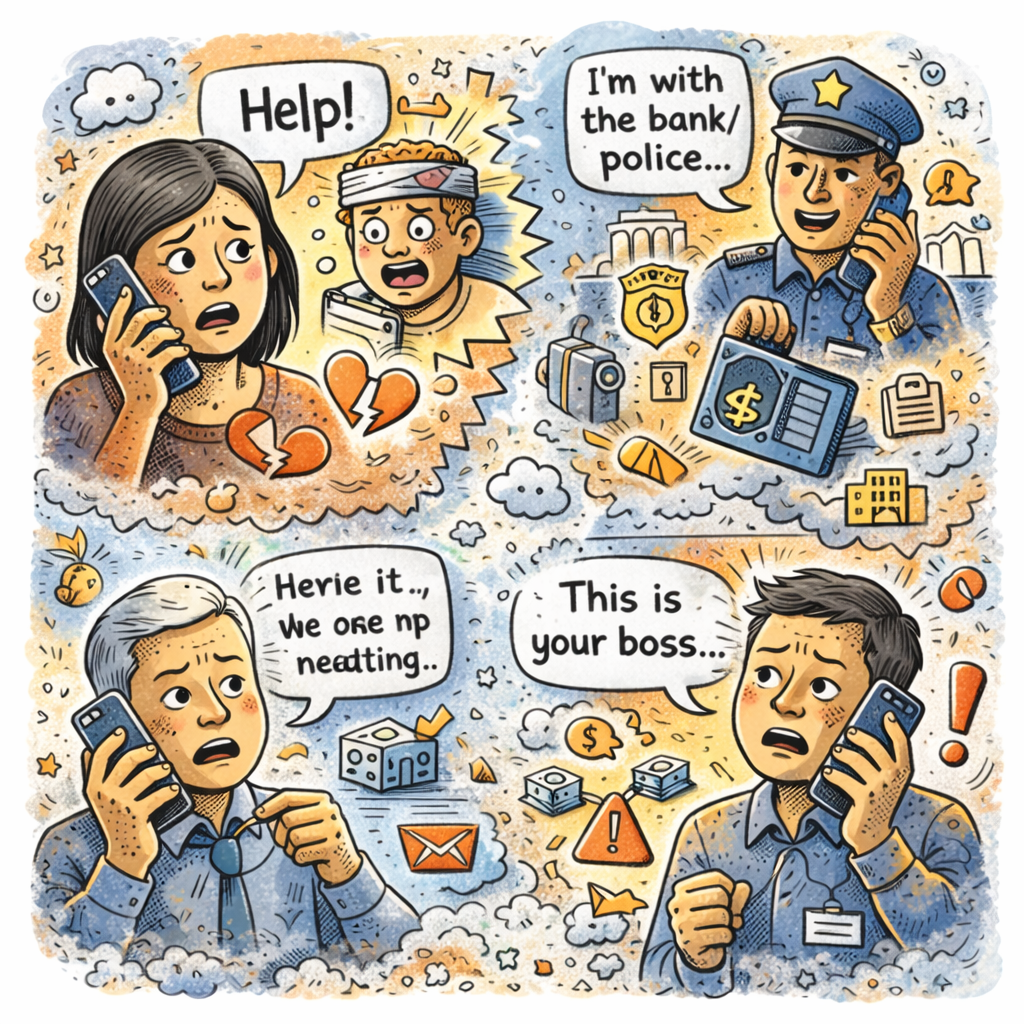
Bank or authority impersonation – The voices that are cloned by scammers sound relaxed and professional. They pretend to be employees of a bank department, police or government officials. They give warnings of frozen accounts, suspicious activity or legal issues. It has a confident tone, and thus the people follow its instructions without questioning.
Business and workplace fraud – The calls made to employees are of the kind that they are by their boss or a senior manager. The caller requests the immediate transfer or a secret action. The voice is like that of someone in authority, also because of these employees are afraid to challenge it, the company loses real money.
Why India Is a Major Target
High smartphone usage
Hundreds of millions of smartphone users exist in India. They chat, hear, and document too many forms, such as reels, stories, voice notes, podcasts, and interviews. This provides a scammer with numerous opportunities to hear a voice and know how it sounds.
A trust‑based culture
Voice recognition is the norm of people. When it comes out like a member of the family or a senior citizen they are not always comfortable questioning. It is easy to fool the victims who fail to validate them, thus making this easier to scam.
Rapid digital payments
Instant transfers and UPI are quite rapid. Fraudsters do not require hours or days, minutes of panic suffice them to seize money.
Warning Signs of AI Voice Scams
- Urgent requests for money or secrecy
- Strong emotional pressure or fear
- Refusal or avoidance of video calls
- Calls coming from unknown or slightly altered numbers
- A faintly unnatural or “flat” tone beneath the emotion
If the situation feels rushed, forced, or designed to stop you from thinking, that’s not an accident. That’s the scam working.
How to Protect Yourself
Always verify – Hang and call him/her again using a number you trust. Do not believe in the calls coming in.
Do not send the money after a voice call. It may sound convincing, still, verify it with video, with text or with someone a person can trust.
Limit public voice exposure
You should not place long voice records on the open sites. Consider your voice as personal information; it is easily abused.
Create family awareness
Discuss AI voice scams with parents, elders, and kids. Agreement on easy methods of ascertaining first.
Enable bank and UPI alerts
Turn on bank and UPI alerts. Quick alerts enables you to take immediate action in case something goes wrong.
What To Do If You Suspect a Scam
- Warn others
- Stop conversation immediately
- Do not share OTP or details
- Inform bank
- Report to cybercrime portal
The Bigger Threat Ahead
Voice scams of AI are not yet another form of fraud. They are a warning sign. They demonstrate how the technology may circumvent the reasoning process in favor of the emotions themselves. Manipulation does not lead to fear, urgency and trust as its side effects, it is the key tools.
The trust itself is also becoming weak as AI becomes faster, cheaper, and more accessible. The notion that a familiar voice is a real person is crumbling. The consequences of that change are very grave, not in terms of money only, but also in terms of the way people discuss, make decisions and respond in the pressure. Awareness is no longer a choice in such environment. It is the line of defense that is the most powerful.

My Honest Opinion
Such frauds are not effective, as humans are stupid or careless. That is a simple get out of jail free card- and it is not right. They function since AI is designed to exploit emotion and familiarity when we cease to think rationally.
It is now necessary to think differently to keep online safe. You can no longer have blind faith. A skeptical mind and fact-checking behavior cannot be perceived as paranoia, it is simply a survival strategy in the world where identities can be convincingly false.
Final Thoughts
Technology is in a position to repeat voice in a manner that it appears to be real. That changes everything. Voice used to be a strong form of identity but now, it can be faked, trained and used as weapons. Money is not the only threat of voice scams by AI. It’s the slow loss of trust. Once the individuals begin to question each and every call, each and every emergency appeal, each and every emotional appeal, the society becomes more closed and fragmented. Such an expense is larger than money.
This is the reason why it is important to slow down. Scammers win on speed. They generate panic in such a way that you do not think, do not check, and do not enquire. Rest and their superiority are destroyed.
Response to all urgent voice calls as unverified until you show otherwise. Develop confirmation, even among friends. Get used to having to check twice rather than be ashamed of it. In the AI age, it is not wiser to be safer than fraudsters. It is a result of being less anxious than them.


 Fake Customer Support & Helpline Scams