
 TrendPedia
 This long held true since people almost automatically believed the internet. When anything appeared to be real, people believed that it was most likely to be. When a story was popularized, the time appeared to be true. In case a platform was large, it was considered as fair.
That kind of internet is gone.
By 2025, it is not only the case that online trust is gradually eroding, but it is disintegrating. It is not the sudden irrationality, or cynicism of people; it is the fact that the structures that had established trust fail to keep pace with the scale, pace and driving incentives of the present day internet. An abrupt shift and mistrust of the financial system which we are currently experiencing are not temporary.
It is a permanent transition to the alternate type of digital world.
How Online Trust Used to Work
During the era of the early internet, individuals believed in one another due to mere concepts. Making content took work. It was difficult to get it out into others. Mistakes are expensive, and one could easily detect when one was telling a lie. So, human beings used snap-ons such as who was famous, who was influential, what already was known, and what was popular among most. It was great that those clues were quick since the world was small. Now the world has grown huge.
Anyone can invent convincing tales at a single instance. They are able to connect with anyone at any location. Machines are the spreaders of things. The former quick clues are no longer effective; they simply became useless.
Why Trust Is Collapsing Now
AI Has Changed the Nature of Content
In 2025, you cannot suppose that everything is created by people. Computers can create or edit texts, images, videos and even sounds. The key issue is not the fact that AI content is there, but it too often resembles the real and human created objects and things too closely.
It is not a problem of people believing that lies were the case when fake material appears authentic. The actual problem is the fact that they end up distrusting everything. The reality may be challenged further, and skepticism turns out as the general response.
Platforms Reward Engagement, Not Accuracy
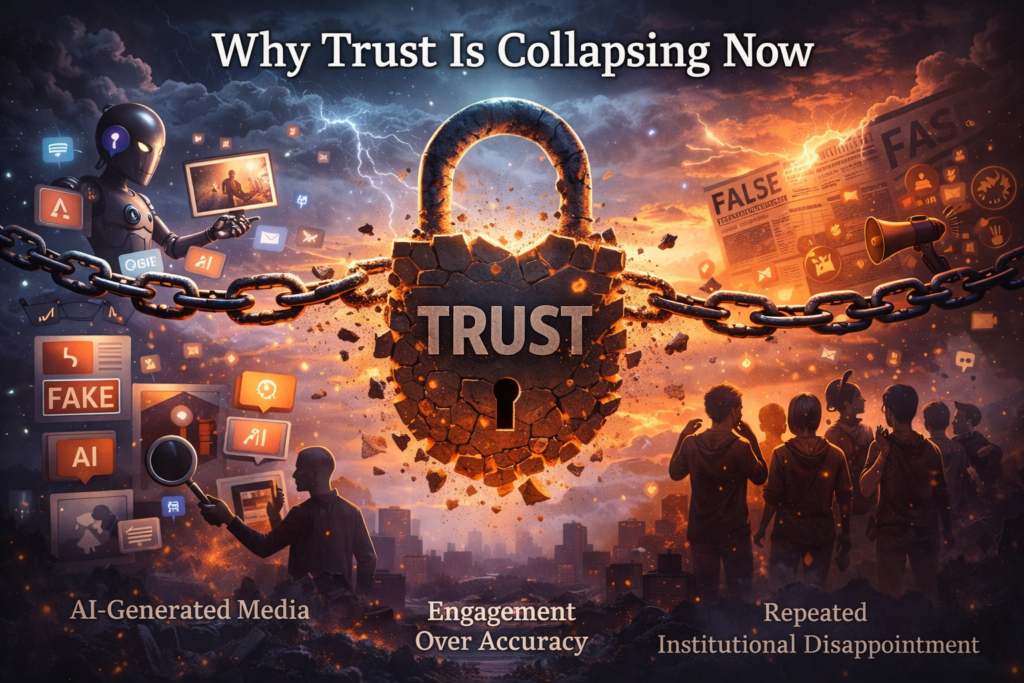
The majority of the websites do not attempt to present the truth. Their emphasis is on liking to capture attention, evoke strong emotions in persons, and extending the user time on the site. Plain and truthful posts tend to lose to flashy or plain ones. In the long run individuals become aware of this trend.
When individuals continue to witness a rapid spread of wrong information and corrections take too long or rather silent, it reduces the trust of the entire system. Even the facts begin to look dubious. The act of recurring preferences to other ends murders trust.
Repeated Institutional Disappointment
Individuals were requested to have faith in platforms, media, facilities of moderation, and specialists. At times that faith had been warranted. Often, it wasn’t handled well. There was inconsistency in the application of rules. Plots changed without any description. Mistakes were made and accountability was not taken. Communication went around decisions that were often, even when the decisions themselves were reasonable.
Trust is fragile. After being broken, every subsequent explanation seems arrogant, and all corrections are intense.
When Proof Loses Its Power
One of them is a big change: Evidence is no longer the end of arguments. Videos may be made to appear unreal. Pictures can be changed. Sound can be copied. Context may be abducted or constructed. Previously, evidence resolved disputes. It is time to make new arguments with proof.
Convincing words take the place of proof when the individuals in question cannot agree with what is real. The story which is loudest or feels the most emotions will generally prevail, whether it is true or not. This is not only confusing. It is also a thing that leaves us unbalanced.
What Actually Replaces Trust
Trust is not fading away without any successors. It is being transformed.
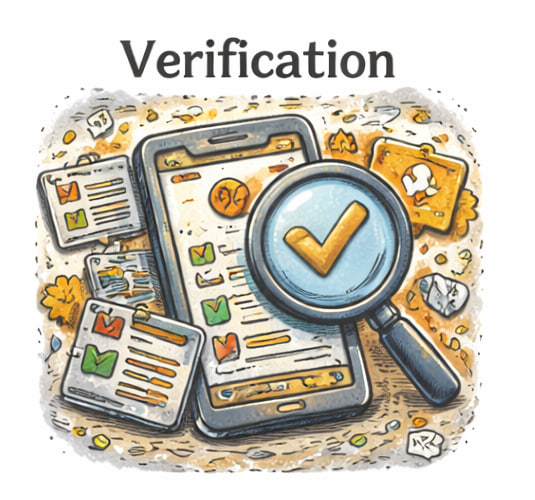
Verification Turns to default – The citizens are no longer ready to believe and ask questions afterward. They check first – or they turn out. It will cause users to be more wary, but it will make them more fatigued. Skepticism is mental work and not all people have time and effort to fact-check everything they come across.
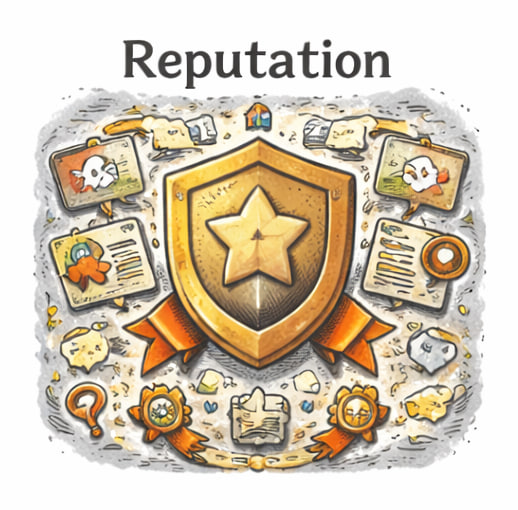
Reputation is Greater Than Observations – In low-trust environment, the power of words is reduced. The important thing though is history: past conduct, consistency, responsibility and what one stands to lose by being wrong. Individuals believe in patterns but not claims.
This is the reason behind the fact that long-run reputation and identity are gaining more significance in comparison with viral reach.
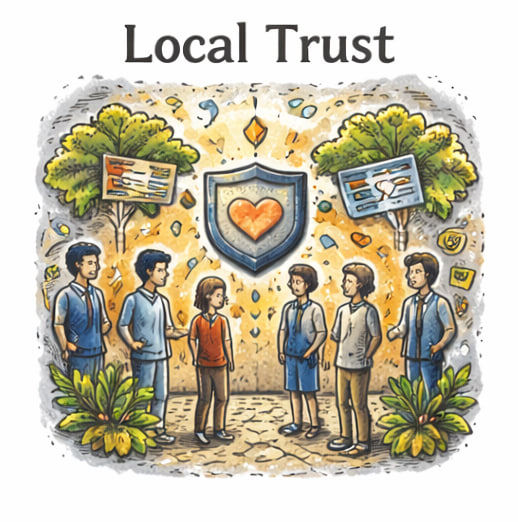
Trust Shrinks in Scale – Big and open platforms are disorderly and untrustworthy. Smaller communities’ smaller communities curated networks and more private groups feel safer due to face-to-face familiarity with faces, more socially enforced norms, and observable bad behavior. Trust is again going to become local, rather than global.
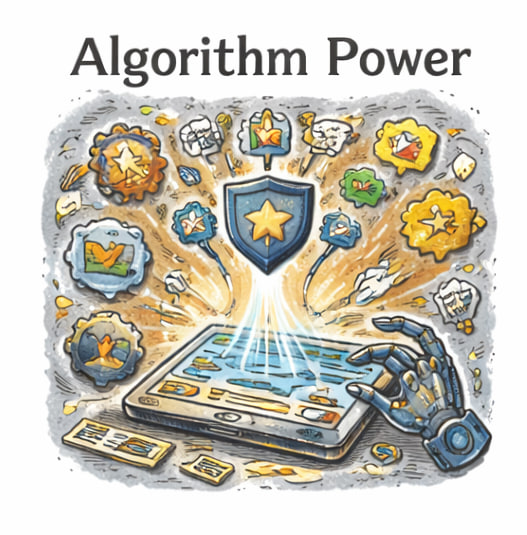
Algorithms Gain More Power – Individuals are losing faith in the content, hence they use mechanisms to pass judgments. Recommendation engines, moderation tools and the ranking algorithms are more powerful due to the feeling of overwhelmingness experienced by users. This leaves everything to those systems at the time when the people are supposed to be making their own choices.
It is among the silent contradictions of the internet with the loss of trust.
The Bigger Picture Most People Miss
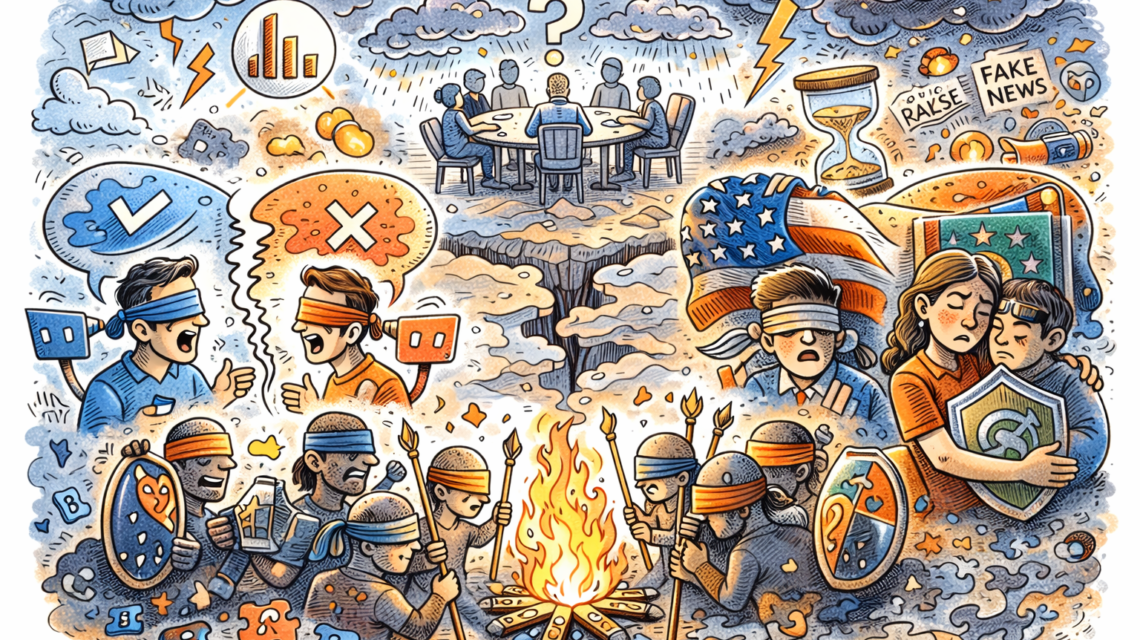
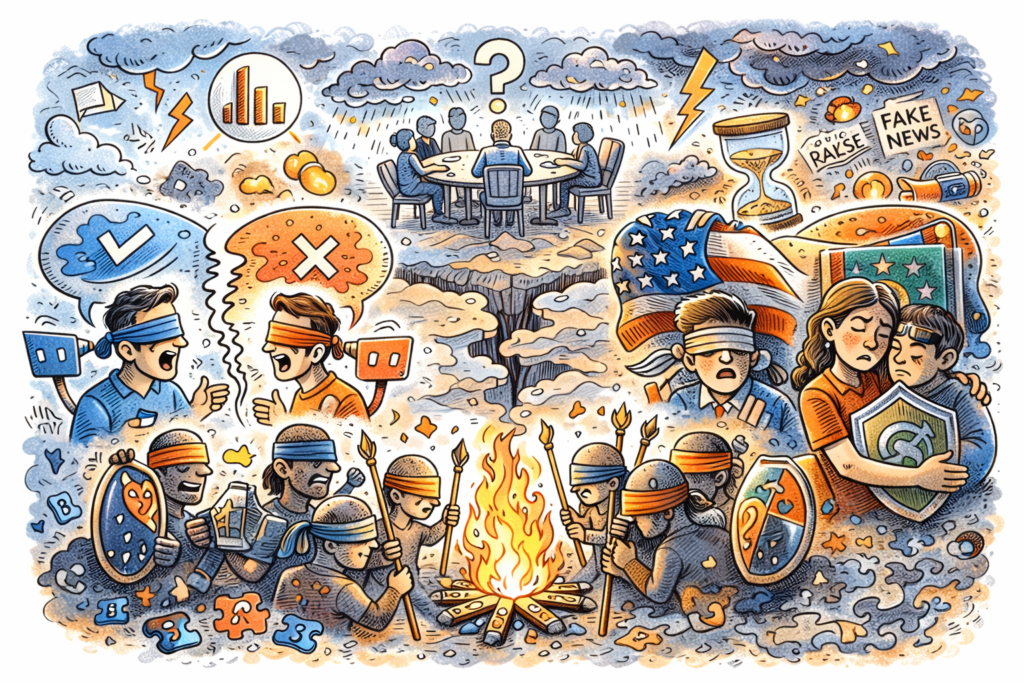
False news or artificial intelligence are not the only aspects of lost trust. It is concerning the way we collaborate. The societies in the contemporary world require a common ground to be functional. When individuals contradict in the more fundamental facts, it becomes more difficult to collaborate. Decision making is more time consuming. Divisions grow. People feel more worried.
Poor trust does not turn people into self-reliant. It helps them get more defensive, more tribal and more willing to be deceived. Confronted with the utter lack of feeling of trust, people tend to rely on the things that will be familiar or comfortable. It is not clever thinking at all, that is survival.
My Honest Opinion
This is the unpleasant fact. It will not go back to a high-trust web. There is too much content. The tools are too powerful. The incentives of people do not coincide. It is unreasonable and ill-advised to tell people to simply trust again.
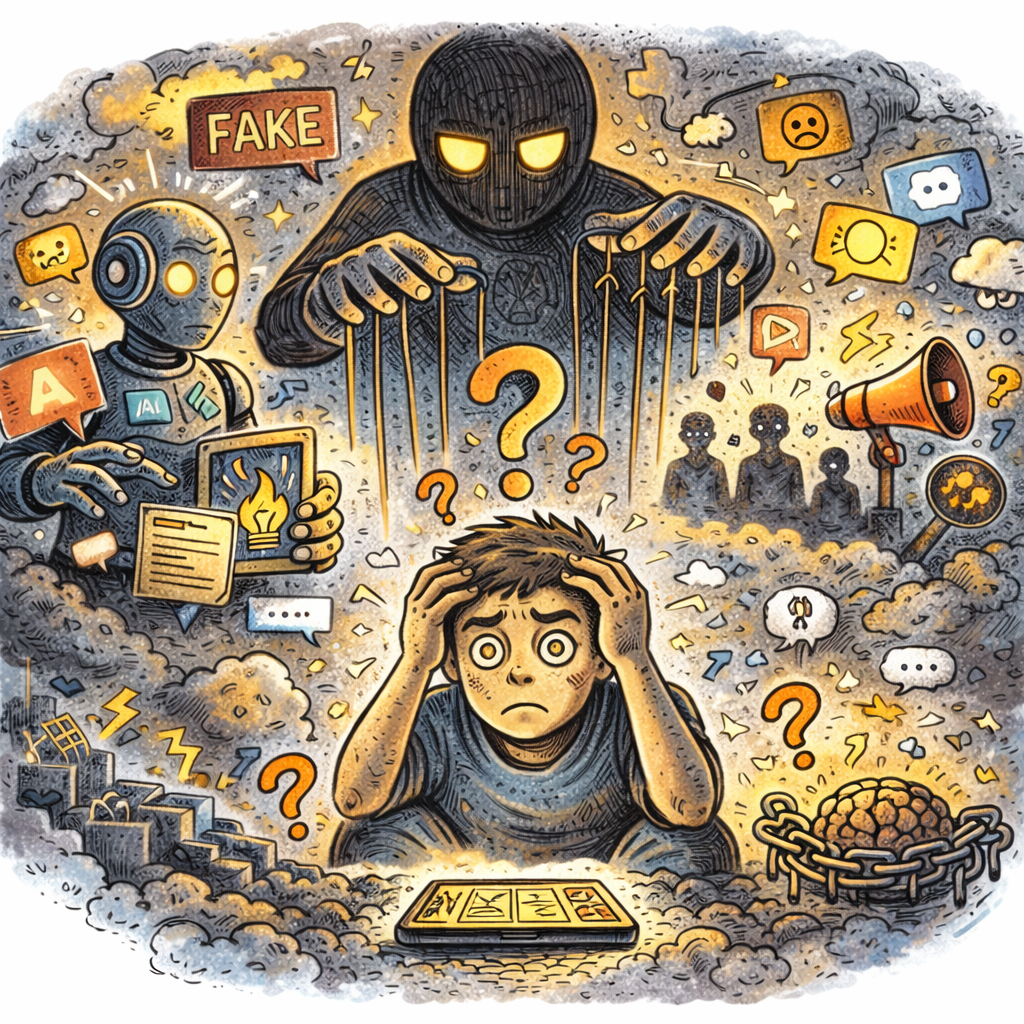
Meanwhile, being conservative is not the remedy. Endlessly questioning is time-consuming, and causes individuals to become anxious, not to mention making them learn to depend on authorities, platforms, or algorithms to decide.
It is not fake content that is the actual threat. The actual threat is learned helplessness that is to be told that the truth cannot be known, so profound thinking seems to be ridiculous. When this attitude becomes prevalent, it gets easy to manipulate as well as individuals do not put up much.
Final Thoughts
Online trust is demise not because people are moronic but because it does not work when there is infinite fake information. Trust will be substituted with nothing comfortable and not easy. It will require strenuous efforts, focus and improved systems. However, it is worse to deny this change than to confront it.
The internet is no longer based on trust first but rather on verify or disengagement. Coming to know that this change is not optional anymore. It is the price of remaining sane and in control in cyberspace.
