
 TrendPedia
 Majority of the population believes that free applications are innocent. No payments, no subscriptions, download and use. That opinion was true at some point but in 2025 it is alarmingly obsolete.
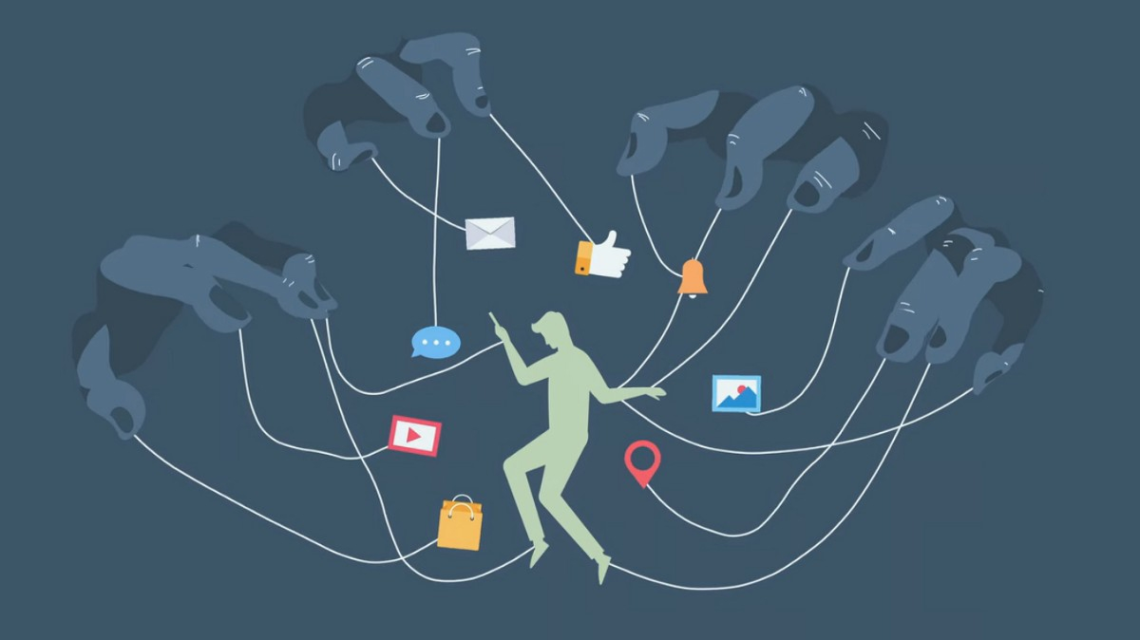
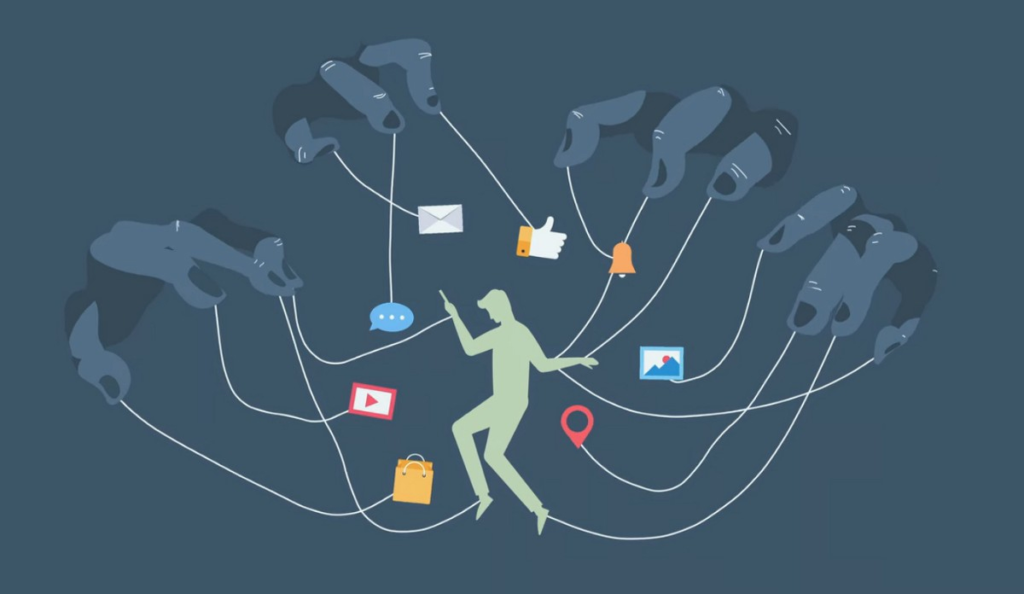
The current platforms are not a tool-neutral one. They are dynamic systems that shape your mind, what you pay attention to and what decisions come as naturally to you. It will lead, as time passes, to your decision-making being steered, your focus being divided, and you simply surrender autonomy to convenience, not in a conspiracy or under duress, but because incentives have been built into the business model.
This site attempts to investigate that undercover trade-off. The ability to think and act freely is the best that you lose when technology begins to influence the behavior rather than merely serving it.
What “Free” Really Means in 2025
Free applications are not based on benevolence; they are based on exploitation.
Where money is not the price, there will be an alternative price.
Nowadays, raw data with it is not only that which is stolen.
Much more useful, attention, behavioral patterns, predictability, and finally control over future decisions that you are likely to make.
The extraction made in the earlier years was crude and uncouth. Social networks gathered information, monetized advertisements, and waited to be correlated. The system is totally different by 2025.
The current applications learn on-the-fly, personalize to every customer, and optimize not only to engage but to achieve behavioral results.
They do not simply look at what you do anymore. They observe your reaction and challenge your transformation, and tighten the means by which they direct you.
What seems to be free access is, actually, continuous involvement into systems that are created to influence your choices in a very subtle and continuous manner.
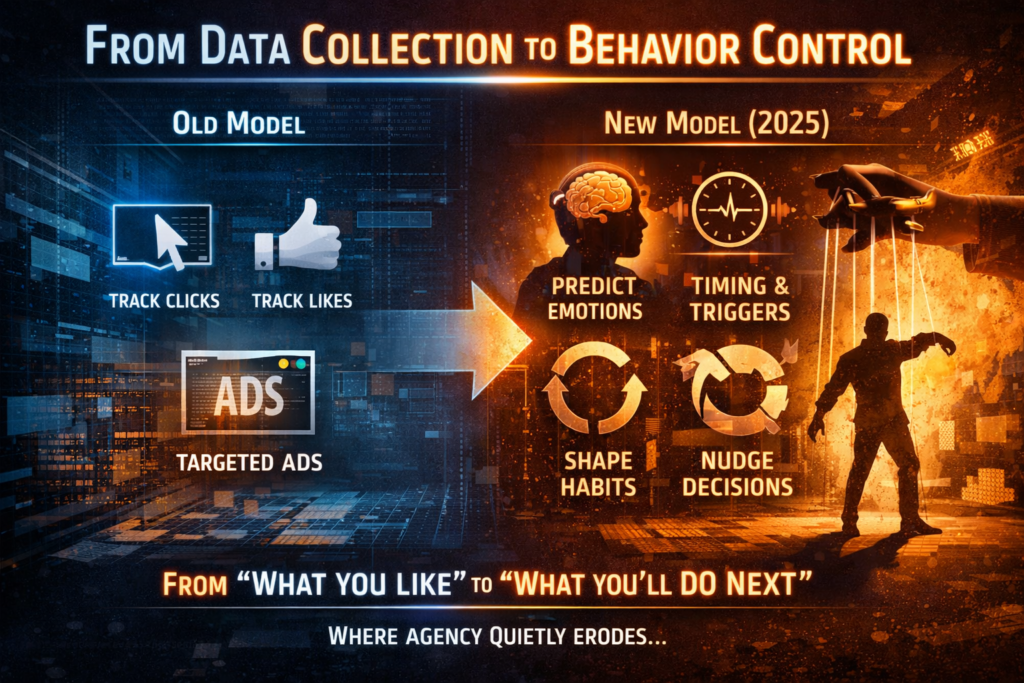
From Data Collection to Behavior Control
It did not occur in one day and that is why most of the people are not aware of the shift. Early platforms used were reactive. They monitored clicks, liked, and displayed advertisements in accordance with what you were already interested in. The system had to wait that you would make the first move.
By 2025, that model is obsolete. The current platforms foresee moods, personalize the timing and context of data, and enhance the patterns after weeks and months. They do not passively react to the actions- they determine them. Judgments are primed in front of you, likes are directed in front of them becoming judgments, and habituality causes influence to become a habit.
It is no longer about knowing what you like. It is anticipating your next action- and modifying the surrounding in such a way that makes success more possible. It is there that agency is not gone with a bang but is undermined in a silent one-decision after another.
The Illusion of Choice
You have the sense that you are in charge. It isyour choice concerning what to watch, what to read, what to purchase and who to follow. The possibilities are on the surface limitless. As a matter of fact, such decisions are not often neutral. They are both filtered and rearranged, and being filtered again and again, reinforced by algorithms more optimized to a single output: continued engagement that is beneficial to the platform.
The system does not assess the content in question as to whether it is having a positive effect on your thought processes, broadening your vision, or advancing your long-term goals. It judges whether it has been keeping you engaging. If it does, it’s promoted. If it doesn’t, it disappears. This will eventually develop a false impression of independence- where there is choice, but choices that are within limits that you did not create and may not necessarily be able to see.
Attention Is the First Casualty
Agency depends on attention. Without the ability to focus, reflect, and pause, meaningful choice collapses. Free apps systematically undermine this foundation. Endless feeds remove natural stopping points, notifications fracture deep concentration, and variable reward systems condition users to check “one more time,” even when there’s nothing new or valuable to gain.
The long-term effects are subtle but corrosive. Boredom becomes intolerable. Sustained thinking feels uncomfortable. Silence begins to register as something wrong rather than something useful. This isn’t a side effect of technology it’s a predictable outcome of systems designed to maximize time spent, not clarity gained.
Personalization That Boxes You In
Personalization is positioned as a positive effect, yet its actual purpose is efficiency, which will present you with that which will keep you interested with the minimal effort. Apps are personalized to your habits, showing less and less, exposing you to fewer dissenting viewpoints, and playing up to pre-existing opinions. Adventure yields to monotony. Discovery is replaced by reinforcement.
What it leads to is not freedom of scope and improved comprehension. It is confinement through algorithms. You are no longer actively pursuing information or experience; you are receiving that which the system can project on predicting will keep you enslaved, contented, and interested. In the long run, the world becomes smaller not due to lack of information but due to optimization replacing curiosity.
Agency vs. Convenience: The Trade You Didn’t Notice
Convenience: Free apps will be offered: quicker answers, more convenient communication, instant entertainment. What they do not promote is the price. Where is there no friction, there is less reflection. Once the hard work is eliminated, the process of decision-making becomes weak. Decisions are responsive rather than conscious.
At some point, you would cease asking simple questions- whether you want something or not, why you are doing it or not and who would be benefiting by the decision. That’s not efficiency. That’s dependency. And when we get the dependency, we do not lose agency in a day. It dies slowly and it becomes more difficult to do things purposefully than it is to allow the system to make choices on your behalf.

Psychological Costs We’re Only Starting to See
By 2025, the side effects are no longer subtle. What’s emerging across users isn’t a collection of isolated issues, but a consistent pattern of cognitive strain shaped by the environments they inhabit:
- A measurable decline in sustained attention and patience, making deep focus and long-term thinking increasingly difficult
- A persistent layer of low-level anxiety and mental fatigue, even in the absence of immediate stressors
These are often framed as personal shortcomings—poor discipline, weak willpower, lack of balance. That framing is wrong. These outcomes are system-level effects produced by platforms optimized for constant engagement and behavioral responsiveness.
In an attention-driven economy, calm and focus are inefficient. Distraction generates more interactions, more signals, and more opportunities for influence. A distracted user isn’t a side effect of the system; it’s the ideal outcome.
“But I Can Just Stop Using the App” – Not So Simple
This is where people fool themselves. Yes, you can uninstall an app. But behaviorally, leaving is much harder than it sounds. These platforms are woven into habits, social circles, and daily routines. Walking away doesn’t just mean losing a tool it can feel like losing connection, relevance, or visibility.
That friction is intentional. The system is designed to make staying easy and leaving uncomfortable. When exit carries emotional and social costs, the idea of “free choice” starts to break down. That’s not freedom.
Who Benefits From the Loss of Agency?
Let’s be clear about the incentives. When users lose agency, platforms gain predictability. When behavior becomes easier to anticipate, advertisers gain leverage. And as uncertainty shrinks, behavioral models become more accurate and more valuable.
What feels like hesitation on your side becomes signal on theirs. What feels like impulse becomes data to refine the next nudge. In this system, reduced agency isn’t a side effect it’s an asset. Your uncertainty is profitable, and your reactions are continuously harvested to make the system even better at steering the next one.
This Isn’t Anti-Technology – It’s Pro-Choice
It’s not an issue of technology per se. The issue is a blind reliance on systems that make quiet decisions for us. Tools should amplify human intent, not replace it. In any case in which technology starts to guide behavior rather than support deliberate action, something quintessentially human is lost.
A healthy digital system preserves conscious choice, gives users real control, and respects clear boundaries. Most so-called “free” apps move in the opposite direction. They optimize for compliance, not clarity-and that distinction matters more than ever.
How to Reclaim Agency (Without Going Offline)
This isn’t about quitting the internet. It’s about using technology deliberately.
Practical Steps:
- Turn off non-essential notifications
- Set hard usage limits
- Choose paid tools when possible
- Periodically audit which apps actually serve you
- Create friction where it matters (time delays, blockers)
Agency grows where awareness exists.
The Real Question You Should Ask
Not:
“Is this app free?”
But:
“What behavior is this app trying to train into me?”
If you can’t answer that, you’re not the user. You’re the product.
The Bigger Question
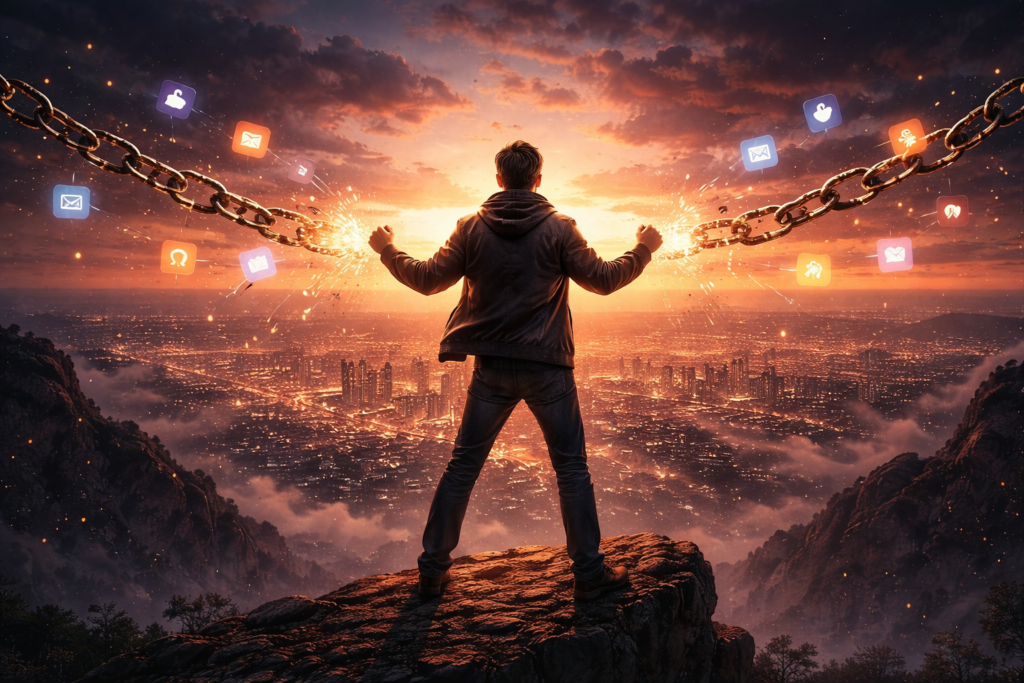
The question is not whether free apps have value or negative effects. It is whether it is possible to nurture original thinking in societies where behavior is constantly shaped. Convenience can be multiplied. Agency cannot. When it is diminished at the population level, it is much harder to restore than it is to protect it in the first place.
My Honest Opinion
Most people aren’t losing control because they’re careless, they’re losing it because the systems they rely on are designed to take it. Ignoring that reality doesn’t make you independent; it makes you easier to shape. If we don’t start treating agency as something worth protecting, we’ll keep mistaking comfort for choice and optimization for freedom.
Final Thoughts
By 2025, it won’t be money, data, or attention that is most precious. It will be agency: The power to live your own life as you choose. The freedom not to have your choices influenced in the background by hidden systems. This is an increasingly scarce and increasingly exploited asset.
Free apps cost money. They cost it a transaction that is far more difficult to recoup than money. Once agency is lost, it does not come easily.
Select wisely.
